
Medically Reviewed & Updated – December 2025 by Dr Garima Thakur, MBBS, IGMC Shimla, Junior Resident, Department of Paediatrics, Postgraduate Institute of Medical Education and Research (PGIMER), Chandigarh
Written with the clinical experience of Dr Seema Gupta (MD Naturopathy), guiding pregnant women through comfort, symptoms, and holistic care.
Many expectant mothers notice cold feet or hands even when the rest of their body feels warm. This unexpected symptom can be puzzling, primarily because pregnancy is known to make women feel warmer overall. Cold feet during pregnancy are surprisingly common and usually harmless, though they can sometimes signal a need for medical attention.
This comprehensive guide explains the causes of cold feet during pregnancy, examines trimester-by-trimester differences, addresses popular gender prediction myths, and provides practical tips for relief and comfort throughout your pregnancy journey.
Understanding Cold Feet in Pregnancy
What does “cold feet” during pregnancy mean?
Cold feet during pregnancy refers to a persistent sensation of coldness in your feet and sometimes hands, even when the rest of your body feels warm or normal. This isn’t the emotional “cold feet” about becoming a parent – it’s a genuine physical symptom where your extremities feel chilly, sometimes even ice-cold to the touch.
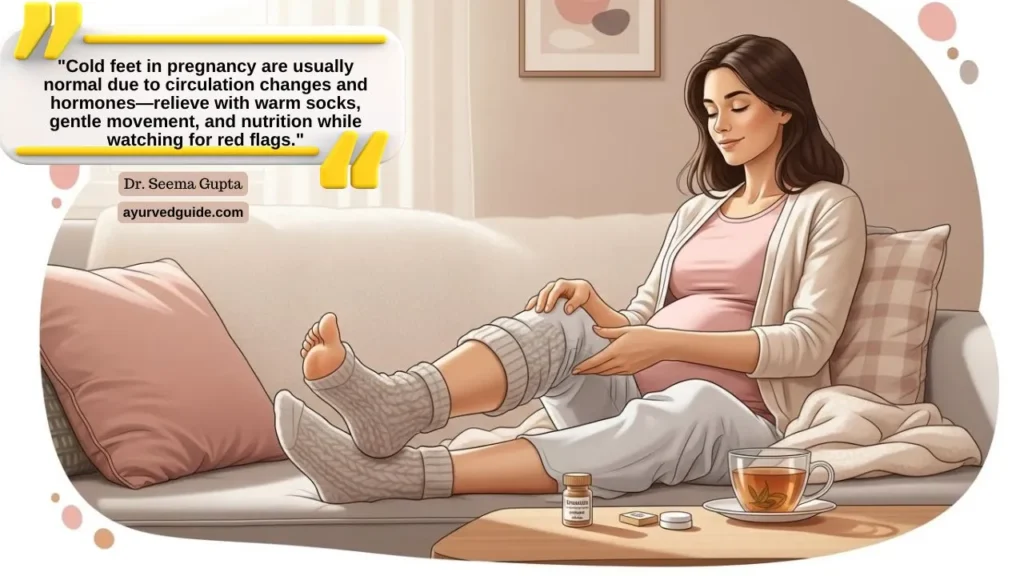
The sensation can range from mildly cool feet that feel comfortable in warm socks to genuinely cold extremities that feel uncomfortable despite being in a warm environment. Some pregnant women describe their feet as feeling “frozen” or experiencing a constant chill that doesn’t improve with typical warming methods.
This cold feet pregnancy symptom often surprises expectant mothers because pregnancy typically increases body temperature due to hormonal changes and increased blood volume. The contrast between a warm body and cold feet can feel particularly noticeable and concerning for first-time mothers.
Quick Symptom Self-Check
Use this to assess if your cold feet are standard or need attention.
| Question/Symptom | Normal if… | Concerning if… |
|---|---|---|
| Duration | Occasionally, improves with warmth | Persistent despite remedies |
| Colour/Appearance | Normal skin tone | Blue/white/purplediscolourationn |
| Accompanying Symptoms | Mild fatigue | Severe tiredness, dizziness, pale skin |
| Response to Movement | Improves with walking/elevation | No change or worsens |
| Overall Impact | Minor annoyance | Disrupts sleep/daily activities |
If 2+ concerning, consult a provider.
Why do some pregnant women feel cold when most feel warm
Pregnancy brings dramatic changes to your circulatory system, which can explain why cold feet occur durinoccur during g pregnancy. Your body undergoes significant adjustments to support your growing baby, and these changes don’t always result in the expected “pregnancy glow” and warmth.
Circulation Changes: During pregnancy, your blood volume increases by 30-50% to support your baby’s needs. However, this extra blood doesn’t constantly circulate evenly throughout your body. Your body prioritises blood flow to your uterus and vital organs, sometimes leaving less circulation for your hands and feet.
Hormone Shifts: Pregnancy hormones like progesterone can affect blood vessel dilation and temperature regulation. These hormonal fluctuations can make temperature control less predictable, leading to cold hands and feet, as well as pregnancy symptoms, even when your core body temperature is elevated.
Blood Volume Distribution: As your uterus grows, it can compress major blood vessels, particularly the vena cava, which returns blood from your lower body to your heart. This compression can reduce circulation to your legs and feet, contributing to the cold sensation.
Metabolic Changes: Your metabolism increases during pregnancy, but the energy is primarily directed toward supporting fetal growth rather than maintaining warmth in your extremities. This redirection can leave your feet feeling colder than usual.
Cold feet vs hot body: is it normal?
Experiencing cold feet while the rest of your body feels warm is actually more common than many women realise. This seeming contradiction is a regular part of pregnancy for many women and reflects the complex circulatory and hormonal changes happening in your body.
The Pregnancy Paradox: Most women expect to feel consistently warmer during pregnancy due to increased blood volume and metabolic rate. However, pregnancy affects different parts of your body differently. Your core temperature may rise while your extremities receive less blood flow, creating this hot body, cold feet pregnancy experience.
Normal Variations: Every woman’s body responds differently to pregnancy. While some women feel consistently warmer, others experience cold extremities throughout their pregnancy. Neither response indicates a problem with your pregnancy – they’re simply different ways bodies adapt to the changes.
When It’s Expected: Cold feet pregnancy symptoms are prevalent in the first and third trimesters, when hormonal changes are most dramatic and when the growing uterus puts the most pressure on your circulatory system.
Individual Differences: Your pre-pregnancy circulation patterns, overall health, and genetic factors all influence how your body regulates temperature during pregnancy. Women who had cold hands and feet before pregnancy may notice these symptoms more prominently during pregnancy.
Experiences from Pregnant Women.
Real Experiences from Pregnant Women,
“I noticed ice-cold feet in my first trimester despite feeling warm overall—turned out to be anaemia, fixed with iron supplements.” – Sarah, 28. (5)
“Third trimester cold feet kept me up at night; yoga and wool socks helped tremendously.” – Emily, 32. (6)
These stories show symptoms vary but often resolve with simple changes.
Causes & Myths Explored
Common medical causes of cold feet in pregnancy
Several medical conditions commonly develop during pregnancy and can contribute to colfcold feet t pregnancy symptoms. Understanding these causes helps you know when cold feet mighindimight indicate a need for medical attentionaia (Iron Deficiency): This is one of the most common causes of cold extremities during pregnancy. Iron deficiency anaemia reduces your blood’s ability to carry oxygen effectively, leading to poor circulation, cold hands and feet, and pregnancy symptoms. Pregnant women need nearly double the iron of non-pregnant women, making deficiency common.
Signs of anaemia-related cold feet include:
- Persistent fatigue alongside cold extremities
- Pale skin, particularly in nail beds
- Shortness of breath
- Rapid heartbeat
- Brittle or spoon-shaped nails
Hypothyroidism: An underactive thyroid affects your body’s temperature regulation system. Hypothyroidism can develop during pregnancy and causes your metabolism to slow down, leading to feeling cold overall, including cold feet and pregnancy symptoms.
Thyroid-related cold feet often come with:
- Unexplained weight gain
- Extreme fatigue
- Hair loss or thinning
- Constipation
- Depression or mood changes
Low Blood Pressure and Poor Circulation: Pregnancy naturally causes changes in blood pressure, and low blood pressure can reduce circulation to your extremities. Poocirculation in the lower extremities often worsens when pregnant women sit or lie in certain positions.
Blood Flow Redistribution: As your uterus grows, it requires more blood supply. Your body naturally redirects blood flow to support your baby’s development, sometimes at the expense of circulation to your hands and feet. This redistribution is normal but can cause noticeable cold feet during pregnancy.
2025 Updates from Recent Studies
A 2024 meta-analysis confirms anaemia causes 40-50% of cold feet cases in pregnancy, linking untreated cases to 15-20% higher preterm risk.(7) ACOG 2025 guidelines emphasise early thyroid screening for persistent cold sympt oms.(8)
Less Common but Serious Causes
While most cold feet in pregnancy are benign, rare conditisuch aslike Raynaud’s phenomenon (exaggerated vessel constriction triggered by cold/stress, causing white/blue fingers/toes) or deep vein thrombosis (DVT: blood clotsthe in legs, with swelling, pain, warmth) can mimic or accompany sympt oms.(1)
DVT risks increase in pregnancy due to hypercoagulability; seek immediate care if one leg is affected (2). Peripheral arterydisease is uncommon but possible in smokers or diabetics.
Trimester-specific differences
Cold feet pregnancy symptoms can vary significantly depending on which trimester you’re experiencing, as each stage brings different physical and hormonal changes.
First Trimester Cold Feet: Early pregnancy brings dramatic hormonal shifts that can affect temperature regulation. Cold ,,feet preg,,naand first-trimesterster symptoms often result from:
- Initial increases in progesterone affect blood vessels
- Early morning sickness reduces iron absorption
- Fatigue and stress are impacting circulation
- Your body is adjusting to increased blood volume demands
Many women notice cold feet as an early pregnancy symptom, sometimes even before they realise they’re pregnant.
Second Trimester Changes: The second trimester typically brings relief from many early pregnancy symptoms, but cold feet may persist due to:
- Peak blood volume expansion puts demands othe the n circulation
- Possible development of gestatioanaemiaeThe growingwing uteis is rus beginning to affect major blood vessels
- Increased awareness of body chanmakesing symptoms more noticeable
Third Trimester Intensification: Cold feet pregnancy third trimester symptoms often become more pronounced due to:
- Maximum uterine size compressing the vena cava
- Increased weight puputsressure on leg circulation
- Swellioedemademathe ) in feet and ankles affecting blood flow
- Reduced mobility leading to decreased circulation
- Pre-eclampsia risk, which can affect circulation
Cold feet pregnancy gender: myth or fact?
One of the most persistent pregnancy myths suggests that cold feet pregnancy gender predictions are possible – specifically, that cold feet means you’re having a boy, or that feeling cold during pregnancy means you’re having a boy.
The Reality: There is no scientific evidence supporting cold feet pregnancy predictions for boys or girls. This myth falls into the same category as other old wives’ tales about pregnancy symptoms predicting baby gender.
Why the Myth Persists: The cold feet pregnancy myth continues because:
- People naturally look for patterns and meaning in pregnancy symptoms
- Confirmation bias makes people remember the times predictions seemed “right.”
- Gender prediction myths provide entertainment during pregnancy
- Social media and online forums spread these stories widely
What Actually Affects Gender: Your baby’s gender is determined at conception by chromosomes from the father’s sperm. No pregnancy symptom, including cold feet during pregnancy, boy-or-girl theories, can change or predict this genetic reality.
Feeling Cold in Pregnancy Boy or Girl: Whether you feel cold during pregnancy has everything to do with your individual physiology, health status, and how your body responds to pregnancy changes. It has nothing to do with your baby’s gender.
Associated symptoms to watch for
While cold feet pregnancy symptoms are usually harmless, accompanying symptoms warrant medical evaluation. Recognising these warning signs helps you know when to seek professional care.
Red Flag Combinations:
- Cold feet with severe fatigue and pale skin (possible sevanaemiaemia)
- Cold feet with swelling in only one leg (possible blood clot)
- Cold feet with bluish skin colour (circulation emergency)
- Cold feet with numbness or tingling (nerve compression)
- Cold feet with severe headaches (possible pre-eclampsia)
Circulation Concerns:
- Feet that feel cold and look white or blue
- Loss of feeling in toes
- Pain when walking
- Wounds that heal slowly
- Cramping in legs or feet
Systemic Symptoms:
- Extreme fatigue beyond normal pregnancy tiredness
- Unexplained weight changes
- Heart palpitations
- Dizziness or fainting
- Shortness of breath at rest
What You Can Do
Practical tips to improve circulation and warmth
Managing cold feet pregnancy symptoms often responds well to simple lifestyle adjustments and home remedies that support healthy circulation.
Footwear and Clothing:
- Wear loose, warm socks made from natural materials like wool or cotton
- Avoid tight socks or shoes that restrict blood flow
- Layer socks if needed, but ensure shoes still fit properly
- Choose shoes with good support that don’t compress your feet
- Consider compression socks designed for pregnancy (consult your doctor first)
Movement and Position:
- Elevate your feet when sitting or resting
- Avoid sitting or standing in one position for extended periods
- Take short walks every 30-60 minutes to promote circulation
- Practice gentle foot and ankle exercises throughout the day
- Avoid crossing your legs while sitting
Safe Prenatal Exercises for Circulation
Gentle movements can help; consult your doctor before starting. 2025 ACOG guidelines emphasise low-impact activities. (3)
| Pose/Exercise | Description & Benefits | Duration/Frequency |
|---|---|---|
| Legs-Up-the-Wall (Viparita Karani) | Lie with legs elevated on the wall – improves venous return, reduces swelling. | 5-10 mins, 2-3x daily |
| Ankle Pumps | Sit/lie and flex/point feet – boosts calf circulation. | 10 reps, every hour |
| Prenatal Yoga Cat-Cow | On hands/knees, arch/flex back – enhances blood flow. | 5-8 cycles, daily |
| Walking | Gentle strolls promote overall circulation without strain. | 20-30 mins, most days |
Daily Habits:
- Stay well-hydrated to support healthy blood volume
- Eat iron-rich foods like lean meats, spinach, and beans
- Take prenatal vitamins as recommended by your healthcare provider
- Get adequate rest to support overall circulation
- Manage stress through relaxation techniques
Environmental Adjustments:
- Keep your home at a comfortable temperature
- Use extra blankets on your feet while sleeping
- Avoid extreme temperature changes
- Consider using a humidifier if the air is dry
Nighttime Relief Strategies
Cold feet often worsen at night, disrupting sleep. Elevate feet slightly with a pillow; use loose merino wool socks. (4) Warm (not hot) foot baths before bed improve circulation. Avoid caffeine post-noon to prevent vasoconstriction.
Partner and Family Support
Loved ones can help: offer gentle foot massages with warm oil (5-10 minutes, using upward strokes); prepare warm foot baths; remind about movement breaks; and assist with shopping for supportive shoes.
Cold Feet in Pregnancy PDF: Free Download
When to consult your healthcare provider
Knowing when cold feet pregnancy symptoms require professional evaluation helps ensure both your health and your baby’s well-being.
Immediate Medical Attention Needed:
- Cold feet with severe, sudden onset of swelling
- Blue or whdiscolourationtionthe of feet or toes
- Complete loss of feeling the in feet
- Cold feet with severe headaches and vision changes
- Signs of blood clots: swelling, pain, warmth in one leg only
Schedule an Appointment Soon:
- Cold feet with extreme fatigue that doesn’t improve with rest
- Persistent cold feet that worsen despite home remedies
- Cold feet accompanied by heart palpitations
- Signs of anaemia: pale skin, shortness of breath, weakness
- Any concerns about circulation or thyroid function
Discuss at Your Next Visit:
- Mild cold feet that don’t interfere with daily life
- Questions about iron or vitamin levels
- Interest in safe exercise options for circulation
- Requests for referrals to complementary care providers
Prepare for Your Appointment:
- Keep a symptom di,ary noting when cold feet are worst
- List all medications and supplements you’re taking
- Note any family history of circulation or thyroid problems
- Prepare questions about safe treatments and lifestyle changes
Differentiating cold feet from other foot complaints
Pregnancy brings various foot-related symptoms, and distinguishing cold feet from other conditions helps presenpresenturate informationur healthcaraccurate information SwelliOedemadema):
- Cold feet: temperature sensation, may havea normal size
- Swelling: increased size, may feel warm, pitting when pressed
- Can occur together, especiallythe in third trimester
Cold Feet vs. Varicose Veins:
- Cold feet: temperature sensation, normal appearance
- Varicose veins: vis,ible enlarged veins, may cause aching
- Both relate to circulation but require different management
Cold Feet vs. Restless Leg Syndrome:
- Cold feet: temperature sensation, relieved by warmth
- Restless legs: uncomfortable sensations, urge to move, worse at night
- Both can disrupt ,sleep but have different triggers
Cold Feet vs. Neuropathy:
- Cold feet: temperature sensation with normal touch sensation
- Neuropathy: numbness, tingling, loss of sensation
- Neuropathy requires immediate medical evaluation
Take-away & Resources
Quick checklist for cold feet in pregnancy
Use this practical checklist to manage cold feet pregnancy symptoms effectively:
Daily Essentials:
- Wear loose, warm socks and comfortable shoes
- Move and change positions every 30-60 minutes
- Stay hydrated and eat iron-rich foods
- Take prenatal vitamins as prescribed
- Practice foot elevation when resting
Weekly Habits:
- Monitor symptoms and note any changes
- Check iron and vitamin levels as recommended
- Practice gentle exercise or prenatal yoga
- Considea r safe foot massage or warm soaks
- Discuss symptoms with your healthcare provider
Warning Signs to Watch:
- Severe or sudden onsof et symptoms
- Cold feet with extreme fatigue or weakness
- Blue or whdiscolourationtion of extremities
- Loss of sensation or severe pain
- Any symptoms that worry you or interfere with daily life
Safe Warming Methods:
- Use lukewarm (not hot) foot soaks
- Layer loose socks instead of tight compression
- Apply gentle heat sources, avoiding direct heat
- Practice safe exercises recommended for pregnancy
- Consider professional prenatal massage
References
The following references are provided to support the information in this article. Please note that websites may update, move, or remove pages over time. If any link appears broken, unavailable, or returns a 404 error, it may be due to changes on the source website and not a mistake in this article.
- https://www.healthline.com/health/pregnancy/feeling-cold-during-pregnancy
- https://www.tommys.org/pregnancy-information/im-pregnant/ask-a-midwife/why-do-i-feel-cold-pregnancy
- https://www.thebump.com/a/feeling-cold-while-pregnant
- https://vimvigr.com/blogs/our-blog/poor-circulation-pregnancy
- https://www.parents.com/pregnancy/my-body/are-the-chills-normal-during-pregnancy/
- https://www.brilliantbirths.com/blog/5-reasons-why-youre-cold-during-your-pregnancy
- https://perelelhealth.com/blogs/news/cold-early-pregnancy
- https://npistanbul.com/en/what-causes-cold-feet
Ayurvedic Perspective on Cold Feet in Pregnancy
In Ayurveda, cold feet during pregnancy (Garbhini Avastha) are primarily viewed as a manifestation of aggravated Vata Dosha, often combined with Kapha involvement or weakened Agni (digestive/metabolic fire). Vata governs movement, circulation (Vyana Vayu), and nerve function; its imbalance leads to poor peripheral blood flow channels (Srotas) and cold sensation in the extremities.
Pregnancy naturally increases Vata (dutchess of pace, space, and ion for the baby and hormonal shifts), making cold feet a common complaint, especially in the first and third trimesters.
Cold extremities reflect Dhatu Kshaya (tissue depletion) or Ama accumulation blocking channels, reducing warmth and nourishment to hands/f,eet while the core body supports the fetus (Garbha Poshana).
Key Ayurvedic Correlations
| Modern Symptom / Cause | Ayurvedic Concept | Implication in Pregnancy |
|---|---|---|
| Poor circulation or blood redistribution | Vyana Vata imbalance with Srotorodha (channel blockage) | Reduced Prana to extremities as the body prioritises vital organs |
| Anaemia (iron deficiency) | Rasa–Rakta Dhatu Kshaya with low Agni | Pandu-like features; reduced Ojas and compromised fetal vitality |
| Hypothyroidism | Kapha–Vata covering Agni with Meda Dhatu involvement | Slowed metabolism, fatigue, and persistent cold sensation |
| Low blood pressure | Vata aggravation with depleted Ojas | Dizziness, weakness, cold hands and feet |
| Overall cold sensation | Dominance of Sheeta Guna (cold quality) | Indicates need for warming, nourishing, and grounding care |
Ayurvedic Management Principles (Contributed by Dr Seema Gupta)
- Pacify Vata & Strengthen Agni
- Warm oil massages (Abhyanga) with sesame oil (Tila Taila) or Dhanwantaram Tailam daily, focusing on feet/legs (upward strokes).
- Foot soaks in warm water with rock salt or ginger.
- Dietary Guidelines
- Favouravor warm, nourishing foods: soups, khichdi, ghee, milk, dates, nuts.
- Include warming spices such as ginger, cinnamon, cloves, and black pepper.
- Iron-rich: pomegranate, beetroot, spinach cooked with ghee.
- Avoid cold, dry, and light foods/drinks; reduce raw salads and caffeine.
- Herbal Support (Pregnancy-Safe, under guidance)
- Ginger tea or Sunthi for circulation.
- Ashwagandha or Shatavari (in milk) for strength and warmth.
- Dashamoola decoction for Vata balance.
- Lifestyle & Yoga
- Gentle poses: Viparita Karani (legs-up-the-wall), ankle rotations.
- Early bedtime; avoid late nights (Vata time).
- Pranayama: Alternate nostril breathing (Nadi Shodhana).
- When to Seek Help
- If cold feet with severe fatigue, swelling, discolouration – consult for possible Rakta Dushti omodernrn venouinsufficiencyyT.
Important: Ayurvedic remedies complement modern care. Always consult a qualified practitioner and obstetrician; self-medication should be n avoided in pregnancy.
References
The following references are provided to support the information in this article. Please note that websites may update, move, or remove pages over time. If any link appears broken, unavailable, or returns a 404 error, it may be due to changes on the source website and not a mistake in this article.
- https://www.easyayurveda.com/2018/01/22/cold-hands-feet-ayurveda/
- https://www.banyanbotanicals.com/info/ayurvedic-living/living-ayurveda/health-guides/understanding-vata/
- Charaka Samhita, Chikitsa Sthana 15 (Vata management)
- https://www.ayurvedacollege.com/blog/pregnancy-ayurveda-garbhini-paricharya/
My support — Dr Seema Gupta’s Consultation
As an Ayurveda and naturopathic physician specialising in women’s health, I provide comprehensive, integrative care for pregnant women experiencing cold feet and other circulation concerns. My approach combines conventional medical understanding with traditional healing wisdom to support your comfort throughout pregnancy.
What I Offer:
- Thorough evaluation of cold feet causes and contributing factors
- Integration of conventional medical care with naturopathic approaches
- Personalisedized free nutrition and lifestyle plans for optimal circulation
- Safe herbal and natural remedies appropriate for pregnancy
- Ongoing support and monitoring throughout your pregnancy journey
My Consultation Process:
- Detailed health his,tory including pre-pregnancy circulation patterns
- Assessment of current diet, lifestyle, and stress factors
- Coordination with your primary prenatal care provider
- Development of a comprehensive comfort and wellness plan
- Regular follow-up to adjust recommendations as your pregnancy progresses
Areas of Focus:
- Nutritional support for healthy circulation and iron levels
- Stress management techniques for overall wellness
- Safe movement and exercise recommendations
- Traditional remedies that complement modern prenatal care
- Education abregularrmal pregnancy changes vs. concerning symptoms
FAQs
Are cold feet a sign of pregnancy?
Cold feet can be an early pregnancy symptom due to hormonal changes affecting circulation, but they’re not a reliable pregnancy indicator. Many non-pregnant women also experience cold feet, especially during colder months or due to health conditions.
Does cold feet mean a boy?
No scientific evidence supports the claim that cold feet during pregnancy predict the baby’s gender. This is a persistent myth, but cold feet pregnancy gender predictions are not accurate. Your baby’s gender is determined by chromosomes, not pregnancy symptoms.
Can anaemia cause cold feet in pregnancy?
Yes, iron deficiency anaemia is a common cause of cold feet during pregnancy. Anaemia reduces your blood’s ability to carry oxygen effectively, leading to poor circulation and cold extremities. This is why iron is essential during pregnancy.
What is normal vs. worrying about? Neet feetregnanSpregnancySymptomset are mild, don’t interfere significantly with daily activities, and may improve with warming methods. Worrying symptoms include severe coldness, blue/white sclerotic numbness, extreme fatigue, or cold feet that worsen despite treatment.
How can I warm my feet safely during pregnancy?
Safe methods include wearing loose, warm socks, gentle foot massage, lukewarm (not hot) foot soaks, keeping feet elevated, and staying active. Avoid heating pads, hot baths, or anything that could raise your core body temperature excessively.
गर्भावस्था में ठन्डे पैर होना सामान्य है या चिंता की बात? (Is cold feet during pregnancy normal or concerning?)
Cold feet during pregnancy are usual due to hormonal and circulatory changes. However, severe symptoms, persistent coldness despite warming efforts, or cold feet with other concerning symptoms should be evaluated by a healthcare provider.
Conclusion
Cold feet during pregnancy, while often concerning to expectant mothers, is usually a normal response to the significant changes your body undergoes. Understanding the causes, knowing when to seek help, and having practical management strategies can help you stay comfortable throughout your pregnancy journey. Remember that every pregnancy is unique, and maintaining open communication with your healthcare provider ensures you receive the support and care you need for both common symptoms and any concerns that arise.
Explore these guides on common pregnancy symptoms and women’s health:
- Am I Experiencing Early Signs of Pregnancy?
- First 72 Hours of Pregnancy Symptoms
- Lower Abdominal Cramps During Pregnancy
- Orangish Urine During Pregnancy
- Pregnancy Body Odor: Causes & Remedies
- Craving for Maggi During Pregnancy
- Armpit Pain During Pregnancy: Complete Guide
- Ultimate Guide to Ayurvedic Women’s Health
- 5 Ayurvedic Morning Routine Tips for Women’s Wellness
- Natural Remedies for Hormonal Imbalance in Females

Dr. Seema Gupta, BAMS, MD (Naturopathy) is an Ex-House Physician in Gynecology and Obstetrics who is Advanced Certified in Diet and Nutrition. with over 27 years of experience in Women’s Health, Ayurveda, Naturopathy, and Diet, she has empowered 70,000+ patients to achieve natural healing. Her expertise in Gynecology and Obstetrics ensures personalized, science-backed advice.