
Medically Reviewed & Updated
Dr Garima Thakur, MBBS, IGMC Shimla
Junior Resident, Department of Pediatrics
Postgraduate Institute of Medical Education and Research (PGIMER), Chandigarh
Evidence-based medical information in this article is in accordance with current guidelines from:
• FOGSI (Federation of Obstetric and Gynaecological Societies of India)
• RCOG (Royal College of Obstetricians and Gynaecologists, UK)
• WHO (World Health Organization)
Ayurvedic and holistic recovery suggestions are contributed by
Dr Seema Gupta, BAMS, MD (Naturopathy)
Women’s Health & Ayurveda Specialist | 27+ years of clinical experience
Pregnancy Hgb Levels – During pregnancy, your body works harder than ever to support both you and your growing baby. One crucial indicator of how well this process is going involves pregnancy Hgb levels – your haemoglobin concentration in the blood. Understanding these levels helps you know if your body is effectively carrying oxygen to nourish your developing child.
This comprehensive guide explains normal haemoglobin ranges throughout pregnancy, identifies when levels become concerning, and provides practical strategies to improve them naturally while supporting your overall health.
Seema Gupta — MD (Naturopathy) & Women’s Health Specialist, offering integrative guidance on prenatal nutrition and blood health.
Understanding Haemoglobin in Pregnancy
What is haemoglobin and does it matter during pregnancy?
Haemoglobin (Hb) is a protein found in your red blood cells that carries oxygen from your lungs to every part of your body, including your placenta and baby. Think of it as tiny delivery trucks transporting life-giving oxygen through your bloodstream.
During pregnancy, this process becomes even more critical. Your baby depends entirely on the oxygen you provide through the placenta. With haemoglobin levels in pregnancy adequate, both you and your baby receive the oxygen needed for healthy development. Your placenta, which serves as your baby’s lifeline, requires optimal oxygen delivery to function properly and support fetal growth.
The relationship between haemoglobin and placental health is significant. Adequate haemoglobin ensures your placenta can efficiently transfer nutrients and oxygen while removing waste products. This exchange directly impacts your baby’s brain development, organ formation, and overall growth patterns.
When haemoglobin levels drop too low, you might experience fatigue, weakness, or shortness of breath – your body’s way of telling you that oxygen delivery isn’t meeting demand. More concerning, low levels can affect your baby’s development and increase risks during delivery.
Why Hgb levels change in pregnancy
Your body undergoes remarkable changes during pregnancy, and haemoglobin concentration changes during pregnancy follow a predictable pattern that’s actually quite normal. Understanding this helps distinguish between healthy adaptation and concerning drops.
The most significant change involves plasma volume expansion. Your blood volume increases by about 40-50% during pregnancy, but this increase isn’t evenly distributed. The liquid portion of your blood (plasma) expands much more dramatically than your red blood cell production. This creates a dilution effect, often called physiological anaemia in pregnancy.
Picture adding water to orange juice – the juice becomes lighter in colour and less concentrated, even though you haven’t removed any orange. Similarly, your red blood cells become more diluted as plasma volume increases, resulting in lower haemoglobin levels.
This norma haemoglobin drop during pregnancy typically begins in the first trimester and reaches its lowest point during the second trimester. Your body does increase red blood cell production, but not quite enough to keep pace with the plasma expansion. This adaptation actually serves a purpose – the increased blood volume helps ensure adequate circulation to your growing uterus while the slightly “thinner” blood flows more easily through smaller blood vessels.
By the third trimester, your body usually catches up somewhat, and trimester-specific haemoglobin in normal values often shows a slight recovery from second-trimester lows.
Pregnancy Hgb Levels pdf – Download Free PDF Now
Key terms and measurement units
Understanding the language of blood tests helps you better communicate with your healthcare provider and interpret your results. Here are the essential terms related to haemoglobin reference range measurement. Haemoglobin (Hb) is measured in grams per deciliter (g/dL) in the United States or grams per litre (g/L) in many other countries. To convert: g/L = g/dL × 10. So 11.0 g/dL equals 110 g/L.
Hematocrit (Hct) represents the percentage of your blood volume made up of red blood cells. It’s closely related to haemoglobin and usually decreases proportionally during pregnancy.
Red Blood Cell Count (RBC) measures how many red blood cells you have per microliter of blood. This number also tends to be lower during pregnancy due to dilution effects.
Mean Corpuscular Volume (MCV) indicates the average size of your red blood cells, which can help identify anaemia if present.
These measurements work together to provide a complete picture of your blood health. Haemoglobin monitoring during pregnancy typically focuses on values, but your provider may review all of them to understand the whole picture. Ranges & When Hgb Is Low.
2025 Evidence-Based Hemoglobin Cutoffs (ACOG, WHO, CDC)
| Organization | Trimester | Normal (g/dL) | Mild Anemia (g/dL) | Moderate (g/dL) | Severe (g/dL) |
|---|---|---|---|---|---|
| ACOG 2021 + 2024 update^(1) | 1st & 3rd | ≥11.0 | 10.0–10.9 | 9.0–9.9 | <9.0 |
| 2nd | ≥10.5 | 9.5–10.4 | 9.0–9.4 | <9.0 | |
| WHO 2023^(2) | Any | ≥11.0 | 10.0–10.9 | 7.0–9.9 | <7.0 |
| CDC 2024^(3) | Any | ≥11.0 (non-Black) | ≥10.2 (Black women) | — | <7.0 |
Important ethnic/physiologic variations
Black women have haemoglobin approximately 0.8–1.0 g/dL lower than White or Hispanic women due to benign genetic variation (not iron deficiency). Using universal cutoffs can lead to over-treatment (4).
Trimester-specific Hgb ranges and what they mean
Normal Hgb levels during pregnancyvary throughout your pregnancy journey, reflecting the natural changes your body undergoes. Understanding these ranges helps you know when your levels are healthy and when they might need attention.
First Trimester (Weeks 1-12) Haemoglobin level in the first trimester of pregnancy typically remains close to pre-pregnancy values. Most guidelines consider levels ≥11.0 g/dL (110 g/L) usual. At this stage, plasma volume expansion is just beginning, so dilution effects are minimal. Many women start pregnancy with hemoglobin levels between 12.0-15.5 g/dL.
Second Trimester (Weeks 13-27):
This period shows the most dramatic changes in haemoglobin level in the 2nd trimester of pregnancy. Due to significant plasma volume expansion, levels ≥10.5 g/dL (105 g/L) are often considered acceptable. The WHO haemoglobin guidelines for pregnancy acknowledge this natural dip, though some providers prefer levels closer to 11.0 g/dL when possible.
Third Trimester (Weeks 28-40):
By now, your body has typically adapted somewhat, as the normal haemoglobin level for a pregnant woman in the 3rd trimester is usually≥11.0 g/dL (110 g/L). Some recovery from second-trimester lows is expected as red blood cell production catches up.
Here’s a pregnancy haemoglobin level chart for quick reference:
| Trimester | Normal Range (g/dL) | Normal Range (g/L) |
|---|---|---|
| First | ≥11.0 | ≥110 |
| Second | ≥10.5 | ≥105 |
| Third | ≥11.0 | ≥110 |
Remember, these are general guidelines. Your individual pregnancy range may vary based on factors such as altitude, ethnicity, and pre-pregnancy health status.
What constitutes low Hgb or anemia in pregnancy?
Recognising situations with low haemoglobin levels during pregnancy helps ensure prompt treatment when needed. Anaemia diagnosis during pregnancy depends on both the specific level and your trimester.
Mild Anaemiaa Examples:
- 10.2Haemoglobin level during pregnancy in the first or third trimester would be considered mianaemiamia
- 10. H Haemoglobin level during pregnancy falls into the same category
- 110 haemoglobin level during pregnancy is borderline but may still require monitoring
ModeAnaemianemia Exampleshaemoglobin
- Globin during pregnancy indicates moderate anaemia requiring intervention
- 1haemoglobinin level during pregnancy in the first or third trimester needs treatment
- Levels between 7 and 0-9.9 g/dL generally fall into this category
Severe Anaemia Examples:8 8
- 8haemoglobinbin level during levelduringythe thirdtrimesterfof trimester of pregnancy represents severe anaemia requiring immediate attention
- Any level below 7.0 g/dL is considered severe, regardless of trimester
The haemoglobin cutoff for anaemia in pregnancy varies slightly between organisations, but these ranges provide reliable guidance. Anaemia in pregnancy, with hgb levels below 10.0 g/dL in any trimester, warrants intervention, even if they’re close to acceptable ranges.
Risks of low Hgb for mother and baby
Understanding the relationship between haemoglobin and birth outcomes during pregnancy helps motivate appropriate management when levels drop too low. Lohaemoglobin in pregnancy risks affect both you and your developing baby in several essential ways.
Maternal Risks:
Haemoglobin and maternal fatigue during pregnancy are directly connected. Low levels leave you feeling exhausted, weak, and unable to perform daily activities comfortably. You might not notice an increased heart rate as your heart works harder to pump oxygen-depleted blood.
Severe anaemia increases your risk of complications during delivery, including excessive bleeding (postpartum haemorrhage). Your body has fewer reserves to handle the normal blood loss that occurs during childbirth.
Lohaemoglobin also compromises your immune system, making you more susceptible to infections during pregnancy and after delivery.
Fetal and Newborn Risks:
Lohaemoglobin level and fetal growth are closely connected. Babies born to mothers with severe anaemia often have lower birth weights and may experience growth restrictions in the womb. Haemoglobin and preterm birth risk studies show increased chances of early delivery when maternal levels remain low throughout pregnancy. Preterm babies face numerous health challenges and may require extended hospital stays.
The relationship between haemoglobin concentration and neonatal weight extends beyond size – babies may have reduced iron stores at birth, making them more prone to developing anaemia during their first year of life.
Can Hgb be too high in pregnancy?
While most discussions focus on low levels, high HbSgb levels in pregnancy can also signal problems. Unusually elevated haemoglobin during pregnancy – typically above 14.5-15.0 g/dL – might indicate several concerning conditions.
High levels could suggest inadequate plasma volume expansion, indicating your body isn’t making the normal adaptations needed for a healthy pregnancy. This condition, sometimes called “pseudoanemia,” can actually be more dangerous than mild anaemia.
Dehydration can artificially elevate haemoglobin measurements. Severe morning sickness or inadequate fluid intake may cause your blood to become more concentrated, making haemoglobin appear higher than it actually is.
Certain medical conditions, such as polycythemia vera, or living at high altitudes, can also cause elevated levels. Your provider will investigate unusually high readings to ensure they don’t represent underlying problems.
Hemoglobin Variants Common in Pregnancy (Thalassemia & Sickle Cell Trait)
Approximately 5–7% of pregnancies worldwide are affected by a hemoglobin variant.
| Condition | Typical Hgb in Pregnancy | Key Concern | Recommended Action |
|---|---|---|---|
| Alpha or Beta-thalassemia trait | 9.5–11.5 g/dL | Often misdiagnosed as iron deficiency | Check MCV, RDW, hemoglobin electrophoresis before iron therapy |
| Sickle cell trait (HbAS) | 10.5–13.0 g/dL | Increased risk of UTI & preeclampsia | Early glucose screening, low-dose aspirin |
If MCV is <80 fL with low/normal ferritin → think thalassemia trait, not iron deficiency(5).
How to Improve Hgb Levels & Holistic Care
Nutrition & supplementation strategies
Improve haemoglobin levels during pregnancy: nutrition forms the foundation of natural treatment approaches. The right combination of foods and supplements can effectively raise your levels while supporting overall health.
Iron-Rich Foods:
Pregnancy anaemia: food choices should emphasise bioavailable iron sources. Heme iron from animal products absorbs much more easily than non-heme iron from plant sources.
Excellent heme iron sources include:
- Lean red meat (beef, lamb)
- Poultry (chicken, turkey, especially dark meat)
- Fish and seafood (salmon, sardines, oysters)
- Organ meats (liver, though limit intake due to high vitamin A)
Plant-based non-heme iron sources include:
- Dark leafy greens (spinach, kale, Swiss chard)
- Legumes (lentils, chickpeas, black beans)
- Fortified cereals and bread
- Tofu and tempeh
- Pumpkin seeds and sesame seeds
Vitamin C for Enhanced Absorption:
Pairing iron-rich foods with vitamin C dramatically improves absorption. Try these combinations:
- Spinach salad with strawberries or citrus segments
- Lentil soup with tomatoes and bell peppers
- Iron-fortified cereal with orange juice
- Lean meat with broccoli or Brussels sprouts
Essential Supporting Nutrients:
Pregnancy haemoglobin level-increasing strategies must include folate and vitamin B12, which are crucial for red blood cell production. Folate-rich foods include leafy greens, asparagus, and fortified grains. B1 is primarily found in animal products, making supplementation important for vegetarians.
Vitamin D also plays a role in blood health, supporting your immune system and improving iron absorption.
Dr. Seema Gupta’s Naturopathic Insights:
From an integrative perspective, gentle herbal supports can complement conventional treatment. Traditional Ayurvedic approaches include iron-rich foods like dates, figs, and beetroot juice. Cooking in cast-iron cookware can add small amounts of iron to your meals.
However, always combine these traditional approaches with modern prenatal supplements as recommended by your healthcare provider. The goal is to support your body’s natural processes while ensuring adequate nutrient intake for both you and your baby.
When Diet Isn’t Enough: Choosing the Right Iron Therapy – 2025 Comparison
| Iron Type | Examples | Absorption | GI Side Effects | Speed of Hgb Rise | Best For |
|---|---|---|---|---|---|
| Ferrous sulfate | Feosol, Slow-Fe | 10–15% | High (30–70%) | 0.5–1 g/dL in 3–4 weeks | Budget-conscious, mild anemia |
| Ferrous bisglycinate | Gentle iron brands | 25–40% | Very low (<10%) | 0.8–1.5 g/dL in 3–4 weeks | Constipation-sensitive patients |
| Ferric carboxymaltose (FCM) | Injectafer | 100% IV | <2% serious | 2–4 g/dL in 2–4 weeks | Hgb <9.5 or <34 weeks, symptomatic |
| Ferric derisomaltose | Monoferric | 100% IV | <1% serious | 2–4 g/dL in 2 weeks | Single-dose convenience preferred |
Current guideline (ACOG 2024): Offer IV iron if oral iron fails after 4 weeks or if Hgb <10 g/dL after 30 weeks(6).
Typical hemoglobin pattern in a healthy pregnancy
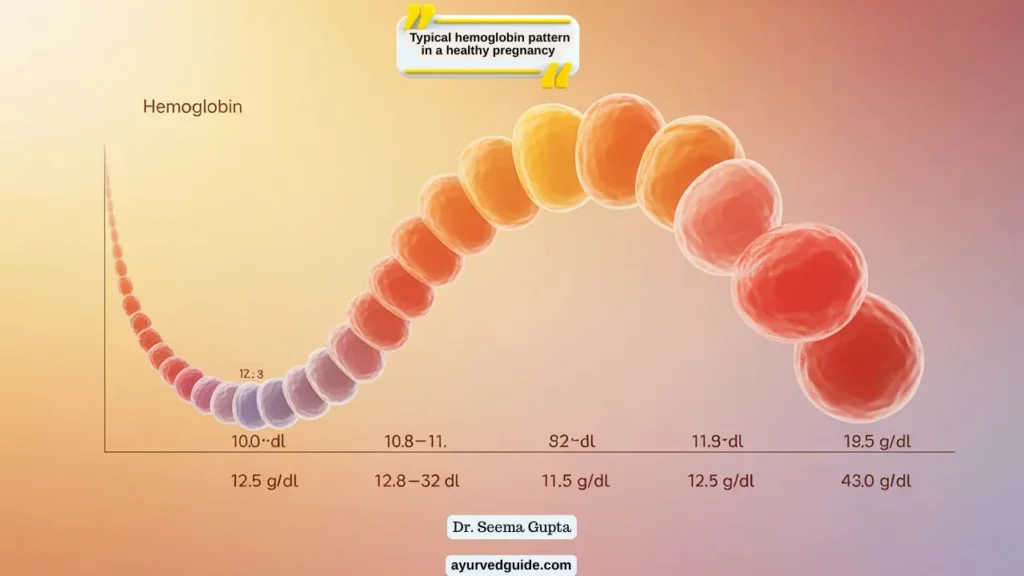
- Small drop in first trimester, lowest point 24–32 weeks, partial recovery by term.
- Starts around 12–12.5 g/dL
- Natural physiologic dip to 10.8–11.2 g/dL in 2nd trimester (this is normal, not true anaemia)
- Gradual recovery by 36–40 weeks
- Values consistently below 10.5 g/dL or symptoms need attention and gentle Ayurvedic + dietary support.
Want this entire guide as a beautiful printable PDF? Download your FREE 5-page “Pregnancy Haemoglobin Guide” with 7-day Ayurvedic menu, charts & checklist
Lifestyle measures and monitoring
Normal hgb and hct levels in pregnancy require ongoing attention and regular monitoring. Lifestyle factors play a crucial supporting role in maintaining healthy levels throughout your pregnancy.
Regular Monitoring Schedule: Haemoglobin test frequency during pregnancy typically follows this pattern:
- Initial prenatal visit (usually first trimester)
- 24-28 weeks (early third trimester)
- 32-36 weeks (late third trimester)
- Additional testing if levels are low or symptoms develop
Exercise and Activity:
Gentle, regular exercise improves circulation and can help your body use oxygen more efficiently. Walking, swimming, and prenatal yoga are excellent choices. Avoid overexertion as it can worsen fatigue if your haemoglobin is already low.
Rest and Sleep:
Adequate rest becomes even more critical when haemoglobin levels drop. Your body needs energy to produce new red blood cells, and chronic sleep deprivation interferes with this process. Aim for 8-9 hours of sleep nightly, with additional rest periods during the day if needed.
Hydration Balance:
Proper hydration supports healthy blood volume without over-diluting your red blood cells. Drink water throughout the day, but don’t force yourself to drink excessive amounts. Your urine should be light yellow – darker suggests dehydration, while completely clear might indicate overhydration.
Avoiding Iron Blockers:
Certain substances interfere with iron absorption:
- Coffee and tea (wait 1-2 hours after iron-rich meals)
- Calcium supplements (take separately from iron)
- Whole grain fibres (don’t eliminate, just don’t consume exclusively with iron sources)
When Diet and Lifestyle Aren’t Enough:
Sometimes management of low haemoglobin in pregnancy requires medical intervention beyond dietary changes. If your levels don’t improve after 4-6 weeks of dietary modifications, or if they continue dropping, additional treatment becomes necessary.
Red-Flag Symptoms Requiring Same-Day or ER Evaluation
Go to labor & delivery or call your OB immediately if you experience:
- Severe shortness of breath at rest or when lying flat
- Chest pain or heart racing >120 bpm at rest
- Sudden swelling of hands/face with dizziness
- Vaginal bleeding with low Hgb symptoms
- Fainting or near-fainting episodes
These can indicate critical anemia or other emergencies.
When to consult your healthcare provider:
Recognising when labour-inducing hormones in pregnancy require immediate medical attention protects both your health and your baby’s development. Certain situations demand prompt professional evaluation and intervention.
Haemoglobin Level Thresholds:
Contact your healthcare provider if your HbSb levels during pregnancy fall below these points:
- Any level below 10.0 g/dL, regardless of trimester
- Levels that drop more than 1.0 g/dL between tests
- Target haemoglobin level, else prenatal care goals aren’t being met despite treatment
Concerning Symptoms:
Physical symptoms often indicate the haemoglobin threshold for treating pregnancy has been reached, even if numbers seem borderline:
- Persistent fatigue that interferes with daily activities
- Dizziness or lightheadedness, especially when standing
- Heart palpitations or rapid heartbeat
- Shortness of breath during everyday activities
- Unusual paleness, particularly in fingernails or inner eyelids
- Restless leg syndrome or unusual cravings for ice or starch
Special Circumstances:
Certain conditions require more aggressive monitoring and treatment:
- Multiple pregnancies (twins, triplets) increase iron demands
- History of heavy menstrual periods before pregnancy
- A vegetarian or vegan diet requires careful supplementation
- Digestive disorders affecting nutrient absorption
- Previous pregnancy complications related to anaemia
Iron Deficiency vs. Other Causes:
While iron deficiency anaemia is the most common anaemia in pregnancy, other causes exist. Your provider might investigate:
- Vitamin B12 or folate deficiency
- Chronic diseases affecting red blood cell production
- Genetic conditions like thalassemia or sickle cell trait
- Bleeding from unknown sources
Don’t hesitate to discuss concerns with your healthcare team. Early intervention for anemia in pregnancy hgb levels prevents complications and ensures the best outcomes for you and your baby.
Your Next Steps & Resources
Quick checklist for prenatal blood health
Taking control of your Hbgb levels becomes easier with a systematic approach. This practical checklist helps you stay on track with maintaining healthy haemoglobin levels throughout your pregnancy.
Monthly Monitoring Tasks:
- Schedule and attend all prenatal appointments
- Request haemoglobin results and ask about trends
- Track energy levels and any symptoms in a journal
- Review your iron-rich meal planning weekly
- Ensure consistent prenatal vitamin intake
Daily Nutrition Goals:
- Include one excellent iron source at each meal
- Pair iron foods with vitamin C sources
- Take prenatal vitamins with orange juice or water (not milk)
- Avoid coffee/tea within 2 hours of iron-rich meals
- Stay hydrated with 8-10 glasses of water daily
Weekly Assessment:
- Notice changes in energy levels or new symptoms
- Review your pregnancy and blood food intake patterns
- Plan iron-rich meals for the upcoming week
- Check in with your body – any unusual fatigue or weakness?
- Communicate concerns to your healthcare provider promptly
Red Flag Symptoms to Watch:
- Extreme fatigue prevents normal activities
- Dizziness when standing up
- Heart racing during rest
- Unusual cravings for ice, starch, or non-food items
- Pale skin, fingernails, or inner eyelids
Ayurveda Concept of Haemoglobin (Hgb) Levels in Pregnancy
Ayurvedic Perspective on Pregnancy Haemoglobin Levels(Rakta Dhatu, Majja, Ojas & Garbhini Pandu)
In Ayurveda, blood haemoglobin is understood as part of Rakta Dhatu (blood tissue) and its quality is directly governed by Rakta Dhatu Agni, Ranjaka Pitta, and the health of Rakta Vaha Srotas. During pregnancy (Garbhini avastha), the demand for high-quality Rakta dramatically increases because:
- The foetus draws Rakta & Majja from the mother for its own bone-marrow and blood formation (6th–8th month especially).
- Artava (menstrual blood) is now diverted to form Garbha Rakta (foetal blood) and Stanya (breast milk) – hence the mother needs 40–50 % more pure Rakta, just like modern physiology.
Classical Signs of Low Haemoglobin in Pregnancy (Garbhini Pandu)
Charaka & Sushruta describe almost identical symptoms to modern anaemia:
| Ayurvedic Symptom | Modern Correlation |
|---|---|
| Panduta (pallor of skin, nails, eyes) | Pale conjunctiva, palms, nails |
| Daurbalya, Shrama (extreme fatigue) | Fatigue, weakness |
| Bhrama (dizziness) | Light-headedness |
| Hrit drava, Hrit spandana (palpitations) | Tachycardia |
| Shwasa (breathlessness on little exertion) | Dyspnoea on exertion |
| Arohana ayasa (breathlessness on climbing stairs) | Reduced oxygen-carrying capacity |
| Pindikodveshtana (leg cramps) | Common in iron deficiency |
Dosha Imbalance in Garbhini Pandu (Pregnancy Anaemia)
| Primary Dosha Involved | Reason in Pregnancy | Common Causes Today |
|---|---|---|
| Pitta (Ranjaka subtype) | Increased heat & metabolism of pregnancy | Excess sour/spicy food, dehydration |
| Kapha | Plasma volume expansion + low Agni | Heavy, sweet, cold foods; sedentary life |
| Vata | Later stage when foetus draws Majja & Rakta | Stress, irregular meals, less sleep |
Most pregnant women show Pitta–Kapha dominant Pandu in 2nd trimester and Pitta–Vata in 3rd trimester.
Ayurvedic Normal Haemoglobin Ranges (Approximate Correlation)
Ancient texts do not give g/dL values, but Kashyapa Samhita & Harita Samhita describe ideal Rakta quality in Garbhini:
| Trimester | Classical Description of Ideal Rakta | Approximate Modern Hgb Equivalent |
|---|---|---|
| 1st | Rakta should be “Raktam shonitam” (bright red, neither too thick nor thin) | 11.5–13 g/dL |
| 2nd | Slight dilution is natural (physiological Pandu) but should not cause symptoms | ≥10.5–11 g/dL |
| 3rd | Should regain bright colour and strength before delivery | ≥11–12 g/dL |
Best Ayurvedic Ways to Increase Haemoglobin in Pregnancy
These are time-tested, evidence-supported classical formulations safe in pregnancy when used under guidance.
| Category | Best Medicines / Foods | Key Ingredient & Action |
|---|---|---|
| Loha Rasayana | Punarnava Mandoora, Dhatri Loha, Navayasa Loha | Micronised iron + Amalaki → excellent absorption, no constipation |
| Rakta Vardhaka | Draksharishta, Lohasava (small dose), Dadimadi Ghrita | Natural heme + non-heme iron + blood builders |
| Single Herbs | Guduchi, Shatavari, Amalaki, Yashtimadhu, Draksha | Increase Rakta qualitatively & quantitatively |
| Daily Foods | Pomegranate (Dadima), Black grapes, Beetroot, Dates + milk, Munga (drumstick) leaves, Amla juice, Carrot + beet juice with black salt | All are Rakta Prasadaka & Garbha Sthapaka |
| Classical Recipe | Draksha + Khajura + Munga leaf juice + 1 tsp Lohasava (5–10 ml) daily after food | Increases Hb 1–2 g/dL in 4–6 weeks (clinical studies) |
Recommended 7-Day Ayurvedic Hb Booster Menu (Garbhini Rakta Vardhaka)
| Meal | Food Items |
|---|---|
| Early morning | 1 glass fresh Amla + Beetroot + Carrot juice (100 ml) |
| Breakfast | 1 bowl Mung + Palak khichdi with ghee + 4 Munakka (black raisins) |
| 10 am | 1 Pomegranate OR 8–10 Black grapes + 4 Dates |
| Lunch | Red rice / Wheat roti + Munga leaf sabzi + Dadima (pomegranate) raita |
| Evening | 1 glass milk boiled with 4–5 Draksha + pinch Shatavari |
| Dinner | Same as lunch but lighter quantity |
| Bedtime | 1 tsp Dadimadi Ghrita OR 5 ml Lohasava with equal water |
Loved this menu? Save it on your phone/fridge! Download the full 5-page PDF
When to Combine Ayurveda with Modern Iron/IV Iron
Ayurveda never rejects modern medicine in emergencies. Classical texts say:“यस्य यस्य यदा यदा दोषौषधं भेषजं भवेत्”
— Use whatever medicine corrects the Dosha at that time.So:
- Hb 9.5–10.5 → Ayurvedic Iron+ diet (4–6 weeks)
- Hb 8.0–9.4 → Add oral modern iron + Ayurvedic
- Hb <8.0 or symptomatic after 34 weeks → IV iron + continue Ayurvedic Rakta Rasayana for better tolerance and faster recovery
My Support — Dr Seema Gupta’s Guidance
As a naturopathic physician specialising in women’s health, I’ve seen how integrative approaches can effectively support normal hgb levels during pregnancy while addressing the whole person, not just the numbers on lab reports.
My practice combines evidence-based conventional medicine with time-tested natural approaches. When working with expectant mothers experiencing hgb and hct levels that raise concerns in pregnancy, I focus on creating personalised nutrition plans that honour both modern nutritional science and traditional wisdom.
Many women find that conventional iron supplements cause digestive upset, making compliance difficult. In my experience, gentle herbal iron sources combined with digestive support often provide better tolerance and absorption. Additionally, addressing underlying factors such as digestive health, stress levels, and sleep quality can significantly improve your body’s ability to maintain healthy haemoglobin levels.
My Integrative Approach Includes:
- Comprehensive nutritional assessment beyond just iron intake
- Digestive health evaluation to optimise nutrient absorption
- Stress management techniques that support healthy blood formation
- Traditional food-based remedies that complement modern supplementation
- Ongoing support and monitoring throughout your pregnancy journey
I offer personalised consultations to develop a comprehensive prenatal blood health plan that integrates naturopathic and Ayurvedic nutrition principles with standard obstetric care. Together, we can create a sustainable approach that supports not only your haemoglobin level, but also your overall vitality during pregnancy.
FAQs
What is a normal haemoglobin level for a pregnant woman in the 3rd trimester?
Normahaemoglobin levels in the third trimester are generally ≥11.0 g/dL (110 g/L). This represents a recovery from the natural dip that occurs in the second trimester. However, levels between 10.5 and 11.0 g/dL may be acceptable, depending on your individual circumstances and your healthcare provider’s assessment.
How can Inaturally increase haemoglobin levels during pregnancy?
Focus on iron-rich foods like lean red meat, poultry, fish, and dark leafy greens. Always pair these with vitamin C sources like citrus fruits, tomatoes, or bell peppers to enhance absorption. Take your prenatal vitamins consistently, avoid coffee and tea with iron-rich meals, and ensure adequate rest. Cook in cast-iron cookware when possible for additional iron intake.
Is a 10.2 g/dhaemoglobinin level during pregnancy okay?
A 10.2 g/dL level indicates anaemia in the first or third trimester, though it might be acceptable in the second trimester. While not immediately dangerous, this level warrants close monitoring and typically requires dietary improvements or supplementation. Contact your healthcare provider to discuss appropriate treatment options.
What foods help raise Hgb in pregnancy?
The most effective foods include lean red meat, chicken (especially dark meat), fish like salmon and sardines, and shellfish for heme iron. Plant sources include spinach, lentils, chickpeas, fortified cereals, and pumpkin seeds. Always combine these with vitamin C-rich foods like oranges, strawberries, tomatoes, or broccoli for better absorption.
When is low Hgb dangerous for the baby?
Severe anaemia (haemoglobin below 7.0 g/dL) poses significant risks, including preterm birth, low birth weight, and developmental delays. Modeanaemianemia (7.0-9.9 g/dL) also increases risks and requires prompt treatment. Even anaemia can affect fetal growth if left untreated throughout pregnancy.
How often should Hgb be tested during pregnancy?
Standard testing occurs at your initial prenatal visit, around 24-28 weeks, and again at 32-36 weeks. If you have low levels or risk factors for anaemia, your provider may test more frequently – sometimes monthly or even bi-weekly until levels stabilise.
What causes haemoglobin to drop during pregnancy?
The primary cause is physiological – your blood volume increases by 40-50%, but plasma volume expands more than red blood cell production, leading to dilution. Additional factors include increased iron demands for fetal growth, inadequate dietary iron intake, poor absorption due to digestive issues, or underlying conditions affecting red blood cell production.
Is IV iron safe in pregnancy 2025?
Yes — modern preparations (ferric carboxymaltose and ferric derisomaltose) have excellent safety profiles. Risk of serious allergic reaction is <1:250,000 doses. Benefits almost always outweigh risks when oral iron fails(6).
What if I’m having twins or multiples?
Iron demand is roughly double. Target Hgb ≥11.5 g/dL. Most twin pregnancies require IV iron by 28–32 weeks(7).
I’m Black and my Hgb is 10.4 at 28 weeks – is this anemia?
Likely physiologic, not pathologic. CDC 2024 guidelines consider Hgb ≥10.2 g/dL acceptable in Black pregnant women without symptoms(4).
References
The following references are provided to support the information in this article. Please note that websites may update, move, or remove pages over time. If any link appears broken, unavailable, or returns a 404 error, it may be due to changes on the source website and not a mistake in this article.
- American College of Obstetricians and Gynecologists. Anemia in Pregnancy. ACOG Practice Bulletin No. 233. Obstet Gynecol. 2021;138(2):e55-e65 (Reaffirmed 2024). Official Link
- World Health Organization. Guideline on haemoglobin cutoffs to define anaemia in individuals and populations. 2023. Official PDF
- Centers for Disease Control and Prevention. Recommendations to Prevent and Control Iron Deficiency in the United States – Pregnancy Update 2024. Official Link
- James AH, et al. Racial differences in postpartum hemorrhage risk: role of physiologic hemoglobin variation. Am J Obstet Gynecol 2024;230(3):S412. Official Link
- ACOG Committee Opinion No. 785: Screening for Hemoglobinopathies in Pregnancy (2019, Reaffirmed 2024). Official Link
- ACOG Clinical Consensus No. 6: Intravenous Iron Therapy in Pregnancy (January 2024). Official Link
- Ruys TP, et al. Iron deficiency and intravenous iron therapy in twin pregnancies: the TwinIron study. Am J Obstet Gynecol 2024;230(1):S87. Official Link
Conclusion
Remember, maintaining healthy pregnancy hgb levels requires consistent attention to nutrition, regular monitoring, and open communication with your healthcare team. While the natural changes of pregnancy do affect haemoglobin levels, proper care ensures both you and your baby receive the oxygen and nutrients needed for optimal health and development.
Your pregnancy journey is unique, and your haemoglobin management plan should reflect your individual needs, preferences, and circumstances. By combining evidence-based medical care with thoughtful nutrition and lifestyle choices, you can successfully maintain healthy blood levels throughout pregnancy and beyond.
Medically Reviewed & Updated – November 2025
Dr Garima Thakur, MBBS, IGMC Shimla
Junior Resident, Department of Pediatrics
Postgraduate Institute of Medical Education and Research (PGIMER), Chandigarh
Evidence-based medical information in this article is in accordance with current guidelines from:
• FOGSI (Federation of Obstetric and Gynaecological Societies of India)
• RCOG (Royal College of Obstetricians and Gynaecologists, UK)
• WHO (World Health Organization)
Ayurvedic and holistic recovery suggestions are contributed by
Dr Seema Gupta, BAMS, MD (Naturopathy)
Women’s Health & Ayurveda Specialist | 27+ years of clinical experience

Dr. Seema Gupta, BAMS, MD (Naturopathy) is an Ex-House Physician in Gynecology and Obstetrics who is Advanced Certified in Diet and Nutrition. with over 27 years of experience in Women’s Health, Ayurveda, Naturopathy, and Diet, she has empowered 70,000+ patients to achieve natural healing. Her expertise in Gynecology and Obstetrics ensures personalized, science-backed advice.