
Pregnancy IUP- Medically Reviewed & Updated – December 2025
Dr Garima Thakur, MBBS, IGMC Shimla, Junior Resident, Department of Paediatrics, Postgraduate Institute of Medical Education and Research (PGIMER), Chandigarh
Written with the clinical experience of Dr Seema Gupta (MD Naturopathy), helping women understand pregnancy, postpartum, and breastfeeding health with clarity and confidence.
When you see “pregnancy IUP” on your ultrasound report, it brings both relief and questions. An intrauterine pregnancy (IUP) means your baby has implanted safely inside your uterus, ruling out the grave concern of ectopic pregnancy. A single live intrauterine pregnancy is the most common and healthy pregnancy scenario.
As Dr Seema Gupta, I’ve guided countless women through understanding their early pregnancy journey, combining medical expertise with compassionate care to help you navigate this exciting yet sometimes uncertain time.
Understanding IUP
What does “IUP” stand for in pregnancy?
IUP medical abbreviation pregnancy stands for “Intrauterine Pregnancy.” This term describes a pregnancy in win which the embryo or fetus has successfully implanted and is developing within the uterus, exactly where it should be. When doctors use the term pregnancy IUP, they’re confirming that your pregnancy is located in the proper place within your womb.
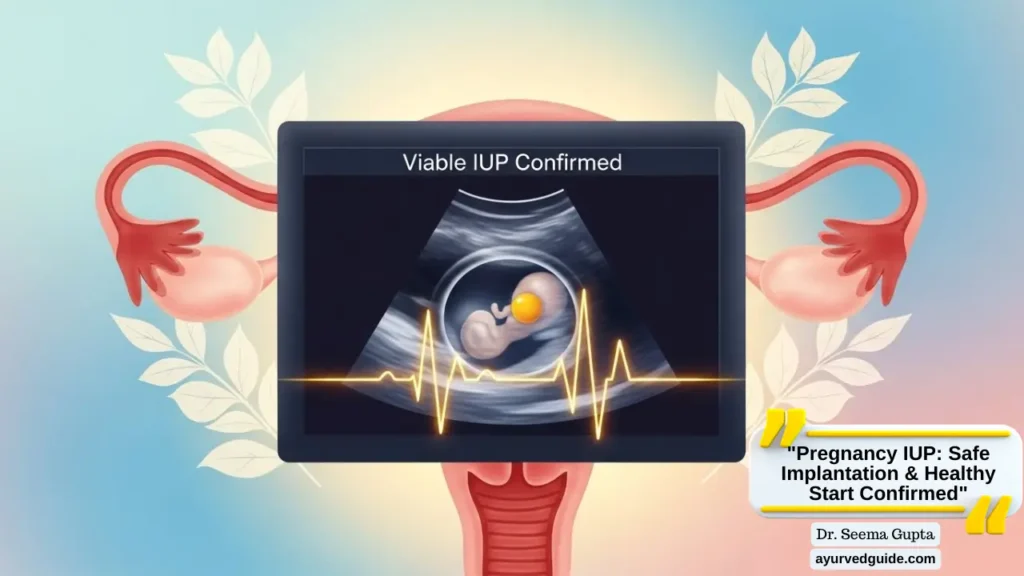
The uterus provides the ideal environment for your baby’s growth and development. Its thick muscular walls can expand as your baby grows, while the rich blood supply through the endometrial lining nourishes the developing embryo. Understanding what IUP stands for in pregnancy helps recognise that this is precisely what doctors hope to see on your early ultrasound scans.
In medical reports, you might see variations like “single IUP pregnancy” or “viable intrauterine pregnancy (IUP),” each providing specific information about your pregnancy’s location and condition. The confirmation of an IUP is often among the first reassuring pieces of news expectant mothers receive.
Intrauterine pregnancy definition & how it differs from ectopic or abdominal pregnancies
The definition of an intrauterine pregnancy centres on location: the embryo implants and develops within the uterine cavity. This contrasts sharply with extrauterine pregnancy complications, where implantation occurs outside the uterus, creating potentially dangerous situations.
An ectopic pregnancy typically occurs when the embryo implants in the fallopian tube, though it can also implant in the ovary, cervix, or abdominal cavity. Unlike a healthy IUP, ectopic pregnancies cannot develop normally and pose serious risks, including internal bleeding and life-threatening complications. The fallopian tubes cannot expand like the uterus, making rupture a significant concern as the embryo grows.
Abdominal pregnancy with IUP is extremely rare, where a pregnancy develops in the abdominal cavity. These pregnancies carry high risks for both mother and baby, including severe bleeding, organ damage, and poor fetal outcomes. The key difference lies in the environment: only the uterus provides the proper space, blood supply, and protective environment necessary for healthy fetal development.
Understanding these distinctions helps explain why confirming an IUP brings such relief to both patients and healthcare providers. The location of your pregnancy fundamentally determines its safety and viability.
Is an IUP pregnancy normal? Single live intrauterine pregnancy meaning
Is an IUP pregnancy normal? Absolutely. A single live intrauterine pregnancy represents the most common and healthiest pregnancy scenario. When your ultrasound report shows “single live intrauterine pregnancy,” it provides three critical pieces of information about your pregnancy’s status.
“Single” indicates you’re carrying one baby, distinguishing it from multiple pregnancies like twins or triplets. While multiple pregnancies can be healthy, they do carry additional considerations and monitoring requirements. A singleton pregnancy typically has fewer complications and follows more predictable development patterns.
“Live” confirms that fetal cardiac activity (heartbeat) is present, indicating a viable pregnancy. This distinguishes your pregnancy from situations where a gestational sac may be present but without signs of life. Seeing a heartbeat significantly reduces the risk of miscarriage and indicates healthy development.
The combination of these factors – single, live, and intrauterine – represents the ideal early pregnancy scenario. Most pregnancies begin this way, and with proper care, continue to develop normally throughout all three trimesters. This confirmation allows you and your healthcare team to proceed with standard prenatal care protocols.
Pregnancy IUP ICD-10 & medical abbreviation explanation
The IUP ICD-10 coding system for pregnancy helps healthcare providers systematically document and track different pregnancy types. For normal intrauterine pregnancies, codes often fall within the O30-O48 range, with specific codes such as O30.00 for twin pregnancy, unspecified number of placentas, and unspecified number of amniotic sacs. However, single pregnancies have their own coding structure.
Standard medical abbreviations you might encounter include:
- IUP: Intrauterine Pregnancy
- EDD: Expected Due Date
- GA: Gestational Age
- FHR: Fetal Heart Rate
- CRL: Crown-Rump Length
Understanding IUP ICD-10 coding for pregnancy complications becomes important if complications arise. For instance, if you have a history of ectopic pregnancy buta current IUP, specific codes help track your risk factors and ensure appropriate monitoring.
Healthcare providers use standardised codes for insurance purposes, medical records, and research tracking. While you don’t need to memorise these codes, recognising them in your medical documents can help you better understand your care and ask informed questions during appointments.
Diagnosing & Monitoring IUP
How to confirm IUP by ultrasound
How to confirm IUP by ultrasound follows a predictable timeline based on gestational age and development milestones. The process begins with identifying key structures that indicate healthy intrauterine development.
The gestational sac in an intrauterine pregnancy typically becomes visible around 4-5 weeks after your last menstrual period. This appears as a small, dark circular structure within the uterine cavity. The sac should be round or oval, with a clear border, appropriately sized for gestational age.
Around 5-6 weeks, the yolk sac on ultrasound IUP becomes visible as a small circular structure within the gestational sac. The yolk sac provides early nutrition for the developing embryo and serves as an essential marker of normal development. A normal yolk sac should be round, measure 3-6mm, and have a clear border.
The fetal pole and IUP confirmation occur around 6-7 weeks, when the early embryonic structure becomes visible. This appears as a slight linear echo within the gestational sac, adjacent to the yolk sac. Once the fetal pole reaches about 5mm in length, fetal cardiac activity should be detectable.
Fetal heartbeat detection in IUP typically occurs by 6-7 weeks of pregnancy. Modern ultrasound equipment can detect heart rates as early as 6 weeks, with standard early pregnancy heart rates ranging from 90-110 beats per minute, gradually increasing to 120-160 beats per minute.
Definitive Ultrasound Signs for IUP
To rule out pseudo-sac (ectopic mimic), look for the double decidual sign (two concentric rings) or intradecidual sign (sac embedded in thickened decidua) [1]. These appear by 5–6 weeks and confirm true IUP with >95% accuracy [2].
IUP vs normal pregnancy – what is a “normal” ultrasound for IUP?
Understanding intrauterine pregnancy vs standard pregnancy terminology can be confusing since an IUP is a normal pregnancy. The question really asks: what constitutes normal IUP ultrasound findings at different stages?
Normal IUP ultrasound findings include several key features. The double decidual ring sign IUP appears as two concentric rings around the gestational sac, representing the decidual layers. This sign helps distinguish a true gestational sac from a pseudo-sac that might occur in ectopic pregnancies.
IUP gestational sac size should correlate with gestational age. The mean sac diameter grows approximately 1mm per day in early pregnancy. By 5 weeks, the sac typically measures 2-8mm, increasing to 8-15mm by 6 weeks and 11-20mm by 7 weeks.
The sac should be located in the upper portion of the uterine cavity (fundal region) and appear round or slightly oval. An irregular shape or location might indicate potential complications requiring closer monitoring.
Normal endometrial thickness also supports IUP development. The endometrial lining typically appears thickened (8-15mm) to support the implanted pregnancy. A thin endometrium might indicate insufficient hormonal support or other concerns.
Sequential measurements during follow-up scans should show appropriate growth patterns. Lack of growth or declining measurements might indicate pregnancy complications requiring further evaluation.
HCG levels for visualisation & viability assessment
HCG levels for visualisation provide supporting evidence for pregnancy health, though ultrasound remains the primary diagnostic tool. Beta-hCG (human chorionic gonadotropin) is produced by the placental tissue and rises predictably in healthy pregnancies.
In normal IUP pregnancies, hCG levels typically double every 48-72 hours during the first 8-10 weeks. Starting levels vary widely, but the pattern of rise is more important than absolute numbers. Levels usually range from 5-426 mIU/mL at 4 weeks, increasing to 1,080-56,500 mIU/mL by 8 weeks.
The correlation between hCG and ultrasound findings helps assess pregnancy viability. Generally, a gestational sac should be visible when hCG reaches 1,000-2,000 mIU/mL (transvaginal ultrasound) or 6,500 mIU/mL (transabdominal ultrasound). However, these thresholds can vary based on equipment quality and individual factors.
When hCG levels plateau or decline, it may indicate pregnancy complications such as miscarriage or ectopic pregnancy. However, some normal pregnancies show slower rises, particularly after 8-10 weeks, when doubling time naturally extends.
Combining hCG trends with ultrasound findings provides the most complete picture of pregnancy health. Rising hCG with appropriate ultrasound development indicates a healthy, viable intrauterine pregnancy IUP.
Discriminatory hCG Levels
hCG “discriminatory zone” helps predict visibility—below threshold, absence of structures is normal [4].
| hCG Level (mIU/mL) | Expected Finding (Transvaginal US) |
|---|---|
| >1,000–2,000 | Gestational sac visible |
| >5,000–6,000 | Yolk sac visible |
| >10,000–20,000 | Fetal pole/heartbeat expected |
Early intrauterine pregnancy – good or bad?
The question Is an ‘early intrauterine pregnancy good or bad ‘” reflects natural anxiety about early pregnancy uncertainty. Generally, confirming an early IUP is excellent news, indicating your pregnancy is in the correct location and developing appropriately.
Early intrauterine pregnancy signs include appropriate gestational sac development, a visible yolk sac, and, eventually, a fetal pole with cardiac activity. When these milestones occur on schedule, an early IUP indicates healthy development and significantly reduces the risks of miscarriage and complications.
However, some early pregnancies present challenges. Intrauterine pregnancy of uncertain viability occurs when ultrasound findings don’t clearly indicate the health of the pregnancy. This might include a gestational sac without a visible yolk sac beyond expected timing, or slow fetal heart rates.
The difference between IUP and PUL (pregnancy of unknown location) becomes essential when an ultrasound cannot definitively locate the pregnancy. While PUL requires careful monitoring to rule out ectopic pregnancy, a confirmed IUP eliminates this primary concern.
Early pregnancy uncertainties often resolve with time and follow-up monitoring. Many pregnancies that initially appear uncertain progress normally, while others, unfortunately, may not. The key is appropriate monitoring and patience during this critical early period.
Pregnancy of Uncertain Viability (PUV) Criteria
When findings are ambiguous, it’s “intrauterine pregnancy of uncertain viability” (PUV). Follow SRU guidelines for diagnosis of failure [3].
| Finding | Threshold for Concern | Action |
|---|---|---|
| Mean Sac Diameter (MSD) | >25mm no yolk sac/embryo | Likely non-viable |
| Crown-Rump Length (CRL) | >7mm no heartbeat | Diagnostic of failure |
| Empty Sac | MSD >16–25mm no embryo | Repeat scan 7–10 days |
| Yolk Sac Only | No embryo after yolk sac seen | Monitor closely |
Symptoms of intrauterine pregnancy
Intrauterine pregnancy symptoms often mirror typical early pregnancy signs, as most pregnancies are intrauterine. Understanding the difference between typical symptoms and warning signs helps you know when to seek medical attention.
Common early IUP symptoms include:
- Missed period and positive pregnancy test
- Breast tenderness and enlargement
- Mild nausea or morning sickness
- Increased urination frequency
- Fatigue and drowsiness
- Mild cramping or pelvic pressure
- Light spotting or implantation bleeding
These symptoms result from rising pregnancy hormones (hCG, progesterone, estrogen) and are generally reassuring signs of normal pregnancy development.
However, distinguishing IUP symptoms from ectopic warning signs is crucial. Concerning symptoms that require immediate medical evaluation include:
- Severe, sharp abdominal or pelvic pain
- Heavy bleeding with clots
- Dizziness or fainting
- Shoulder pain (may indicate internal bleeding)
- Severe nausea and vomiting
Light cramping and spotting can occur in normal IUP pregnancies, especially around the time of expected menstrual periods. However, severe pain or heavy bleeding always warrants prompt medical evaluation to ensure pregnancy safety.
What to Expect & How to Support a Healthy IUP
Monitoring early IUP and when to follow up
Monitoring early IUP involves systematic assessment of pregnancy development and viability through clinical evaluation and ultrasound surveillance. Understanding when and why follow-up is needed helps you participate actively in your pregnancy care.
Standard monitoring includes an initial confirmation scan around 6-8 weeks to document fetal heartbeat and appropriate growth. If this scan shows normal development, routine prenatal care typically follows standard protocols with the next ultrasound around 18-20 weeks.
However, certain situations require more intensive monitoring:
- History of previous miscarriage or ectopic pregnancy
- Fertility treatment pregnancies (IVF, IUI)
- Irregular menstrual cycles make dating uncertain
- Initial scans show slower-than-expected development
- Concerning symptoms like bleeding or cramping
When IUP is visible on scan, it depends on several factors, but most pregnancies show a precise intrauterine location by 6-7 weeks. Follow-up scans may be scheduled 7-10 days apart in early pregnancy to document appropriate growth and development.
Your healthcare provider will determine monitoring frequency based on your individual situation. High-risk factors may warrant weekly scans initially, whereas low-risk pregnancies may require only standard monitoring protocols.
Intrauterine pregnancy treatment or management
Intrauterine pregnancy treatment for a normal IUP involves routine prenatal care focused on supporting healthy development and monitoring for potential complications. Unlike ectopic pregnancies requiring immediate intervention, healthy IUP pregnancies need supportive care rather than treatment.
Standard IUP management includes:
- Regular prenatal appointments (monthly initially, increasing in frequency)
- Prenatal vitamin supplementation, especially folic acid
- Routine laboratory monitoring (blood count, screening tests)
- Ultrasound surveillance at appropriate intervals
- Lifestyle counselling and education
For threatened early complications, management becomes more intensive:
- Pelvic rest and activity modification
- More frequent monitoring and follow-up scans
- Progesterone supplementation in select cases
- Referral to maternal-fetal medicine specialists when indicated
Management of IUP complications depends on the specific issue. Bleeding in early pregnancy might require bed rest and close monitoring, while growth concerns might need specialist evaluation and additional testing.
The goal of IUP management is to support the pregnancy’s natural development while identifying and addressing any complications early. Most intrauterine pregnancies progress normally with standard prenatal care protocols.
Extrauterine pregnancy and why IUP confirmation matters
Understanding extrauterine pregnancy risks highlights why confirming IUP provides such relief for patients and providers. Extrauterine pregnancies, primarily ectopic pregnancies, represent serious medical emergencies requiring immediate intervention.
Ectopic pregnancy with IUP (heterotopic pregnancy) is extremely rare, occurring in about 1 in 30,000 natural pregnancies but more frequently (1 in 100-500) with fertility treatments. This situation involves one pregnancy developing typically in the uterus while another develops ectopically, usually in the fallopian tube.
Confirming IUP eliminates the primary concern about ectopic pregnancy in most cases. Oncean ultrasound clearly shows intrauterine fetal cardiac activity, the risk of concurrent ectopic pregnancy becomes negligible in natural pregnancies.
The importance of early diagnosis cannot be overstated. Ectopic pregnancies can rupture, causing severe internal bleeding and life-threatening complications. Early identification and treatment prevent these serious outcomes.
IUP confirmation allows focus to shift from emergency concerns to routine pregnancy care. This transition from anxiety about location to excitement about development represents a crucial milestone in the early pregnancy journey.
Heterotopic Pregnancy (Rare IUP + Ectopic)
Heterotopic (IUP + ectopic) is rare naturally (1:30,000) but rises to 1:100–500 with IVF [5]. Symptoms mimic ectopic; monitor if fertility treatment history.
Healthy lifestyle tips to support a viable IUP
Supporting a viable intrauterine pregnancy IUP involves both conventional medical care and healthy lifestyle choices to optimise fetal development and maternal health.
Nutritional support forms the foundation:
- Prenatal vitamins with at least 400-800 mcg folic acid
- A balanced diet rich in fruits, vegetables, whole grains, and lean proteins
- Adequate calcium intake (1000mg daily) for bone development
- Omega-3 fatty acids for brain development
- Adequate hydration (8-10 glasses of water daily)
Avoiding harmful substances:
- Complete alcohol cessation (no safe level during pregnancy)
- Smoking cessation and avoiding secondhand smoke
- Limiting caffeine intake (less than 200mg daily)
- Avoiding raw or undercooked foods
- Being cautious with fish high in mercury
Physical and emotional wellness:
- Moderate exercise as approved by your healthcare provider
- Adequate sleep (7-9 hours nightly)
- Stress management through relaxation techniques
- Regular prenatal appointments and monitoring
- Building a support network of family and friends
From a naturopathic perspective, supporting your body’s natural processes enhances pregnancy outcomes. This includes optimising digestion, supporting immune function, and maintaining emotional balance through mind-body practices.
Early IUP Development Timeline
Visual guide to normal milestones.
| Gestational Age | Key Milestone | Normal Findings |
|---|---|---|
| 4–5 weeks | Gestational sac | 2–8mm, fundal, double decidual sign |
| 5–6 weeks | Yolk sac | 3–6mm round structure |
| 6–7 weeks | Fetal pole + heartbeat | CRL 5mm+; HR 90–160 bpm |
| 8–10 weeks | Embryo growth | CRL growth ~1mm/day |
References
The following references are provided to support the information in this article. Please note that websites may update, move, or remove pages over time. If any link appears broken, unavailable, or returns a 404 error, it may be due to changes on the source website and not a mistake in this article.
[1] Radiopaedia. (2025). Intrauterine pregnancy. https://radiopaedia.org/articles/intrauterine-pregnancy
[2] StatPearls. (2025). Early pregnancy ultrasound. https://www.ncbi.nlm.nih.gov/books/NBK570613/
[3] SRU Consensus. (2025). Early pregnancy failure criteria. https://www.ultrasoundquarterly.com/article/S0894-8771(25)00012-5
[4] UpToDate. (2025). Discriminatory hCG in pregnancy. https://www.uptodate.com/contents/early-pregnancy-diagnosis
[5] ACOG. (2025). Heterotopic pregnancy. https://www.acog.org/clinical/clinical-guidance/practice-bulletin/articles/2025/heterotopic-pregnancy
Pregnancy IUP (Intrauterine Pregnancy): The Ayurvedic Perspective
In Ayurveda, a confirmed intrauterine pregnancy (IUP) aligns with successful Garbha Sthapana—the stable implantation and development of the embryo (Garbha) in the uterus (Garbhashaya).
Classical texts like Charaka Samhita and Sushruta Samhita describe this as the ideal outcome of conception, where healthy Shukra (sperm) and Shonita (ovum) unite in a nourished womb, supported by balanced doshas and maternal Rasa Dhatu (nutrient fluid). An IUP signifies proper Kshetra (uterine field) in the four essentials for conception (Ritu, Kshetra, Ambu, Beeja).
As Dr. Seema Gupta, BAMS, MD (Naturopathy) with 27+ years in women’s health, I emphasize Garbhini Paricharya (antenatal regimen) from confirmation to nurture Ojas (vitality), prevent imbalances, and ensure Sukha Prasava (easy delivery). This complements ultrasound confirmation—always consult your Vaidya and obstetrician.
Ayurveda’s View on Successful Implantation (Garbha Sthapana)Garbha Sthapana requires a healthy uterus (Garbhashaya) free from dosha vitiation. Early pregnancy focuses on Kapha nourishment for stability, transitioning to Vata balance later. Texts warn against factors disrupting implantation (e.g., excess Vata causing instability).
Benefits of Ayurvedic Support for Confirmed IUP
From IUP confirmation (~5-7 weeks modern; post-conception Ayurveda), practices enhance viability.
| Benefit | Ayurvedic Mechanism | Relevance for IUP | Suggested Practice |
|---|---|---|---|
| Stable Implantation | Garbhasthapaka (stabilizing) herbs nourish Artava | Supports sac/yolk sac development | Shatavari ghee (¼ tsp daily, post-1st trimester).(1) (2) |
| Fetal Nourishment | Rasayana builds Ojas via Rasa Dhatu | Aids fetal pole/heartbeat | Warm milk + saffron pinch; mung dal.(3) (4) |
| Emotional Calm | Sattvic mind for Manas balance | Reduces early anxiety | Daily meditation; positive affirmations.(5) |
| Dosha Harmony | Pacifies early Kapha excess | Prevents nausea/fatigue | Light walks; avoid heavy foods.(6) |
Dosha-Specific Guidance Post-IUP Confirmation
| Dosha | Early Influence | Recommended | Avoid | Tips |
|---|---|---|---|---|
| Kapha | Nourishment phase | Sweet-moderate (milk, ghee) | Cold/heavy | Gentle yoga.(1) (7) |
| Pitta | Heat from growth | Cooling (coconut water) | Spicy/sour | Moonlight exposure.(3) |
| Vata | Movement risk | Warm/oily | Dry/cold | Abhyanga (oil massage).(8) |
Precautions in Ayurvedic Context
Start mild post-IUP confirmation; avoid strong detox. No self-medication—monitor with ultrasound. Contraindications: Bleeding history, high-risk.
Practical Tips
- Diet: Sattvic—warm milk, fruits, ghee from week 6.
- Routine: Early sleep, gentle Pranayama.
- Herbs: Shatavari/Ashwagandha (limited, guided).
Key Takeaways
Ayurveda celebrates IUP as divine Garbha Sthapana, nurturing through Garbhini Paricharya for healthy progression. Blend with modern monitoring for reassurance. For personalized plan, WhatsApp Dr. Seema Gupta.
FAQs
Q: Ayurvedic view on early IUP confirmation?
A: Marks successful Garbha Sthapana; start Kapha-nourishing regimen for stability.^1^
Q: Safe herbs after IUP seen on scan?
A: Shatavari supports Rasa; consult for dose.^2^
Q: How to support heartbeat detection Ayurvedically?
A: Sattvic diet + calm mind builds Ojas.^5^
References
The following references are provided to support the information in this article. Please note that websites may update, move, or remove pages over time. If any link appears broken, unavailable, or returns a 404 error, it may be due to changes on the source website and not a mistake in this article.
- Charaka Samhita Online. (n.d.). Garbhini Paricharya – Pregnancy Care in Ayurveda. https://www.carakasamhitaonline.com/mediawiki-1.32.1/index.php?title=Garbhini_Paricharya
- Easy Ayurveda. (2015, June 25). Pregnancy Care In Ayurveda: Month Wise Diet, Do’s And Don’ts. https://www.easyayurveda.com/2015/06/25/pregnancy-care-in-ayurveda-month-wise-diet-dos-and-donts/
- Banyan Botanicals. (n.d.). Ayurvedic Guide to a Healthy Pregnancy. https://www.banyanbotanicals.com/info/ayurvedic-living/living-ayurveda/pregnancy/
- Joyful Belly. (n.d.). Ayurvedic Pregnancy Care. https://www.joyfulbelly.com/Ayurveda/article/Ayurvedic-Pregnancy-Care/345
- Kerala Ayurveda. (n.d.). Garbhini Paricharya – Ayurvedic Antenatal Care. https://keralaayurveda.biz/blogs/ayurveda/garbhini-paricharya-ayurvedic-antenatal-care
- The Ayurveda Experience. (n.d.). Ayurvedic Pregnancy Diet: Month-Wise Guide. https://blog.theayurvedaexperience.com/ayurvedic-pregnancy-diet-month-wise-guide/
- Planet Ayurveda. (n.d.). Ayurvedic Treatment for Pregnancy Care. https://www.planetayurveda.com/library/ayurvedic-treatment-for-pregnancy-care/
- Ayurtimes. (n.d.). Garbhini Paricharya (Ayurvedic Antenatal Care). https://www.ayurtimes.com/garbhini-paricharya-ayurvedic-antenatal-care/
When IUP isn’t straightforward: “intrauterine pregnancy of uncertain viability”, multiples, molar with IUP
Not all intrauterine pregnancies follow textbook development patterns. Understanding complex scenarios helps you know what to expect and what questions to ask when facing uncertainty.
Intrauterine pregnancy of uncertain viability occurs when ultrasound findings don’t clearly indicate the health of the pregnancy. This might include:
- Gestational sac present, but no visible yolk sac beyond expected timing
- Visible yolk sac but no fetal pole when it should be apparent
- Fetal pole present, but no detectable cardiac activity
- Slower than expected growth on serial scans
These situations require careful monitoring with repeat scans, typically scheduledevery 7-10 days. Many uncertain pregnancies eventually show normal development, while others, unfortunately, may not progress.
Multiple pregnancies (twins, triplets) require specialised monitoring. Twin pregnancies carry higher risks, including:
- Increased chance of miscarriage
- Higher risk of birth defects
- Greater likelihood of pregnancy complications
- Need for more frequent monitoring and specialist care
Molar pregnancy with IUP represents a rare but serious condition where abnormal placental tissue develops. Complete molar pregnancies have no fetal development, while partial molar pregnancies might have some fetal tissue,e but with chromosomal abnormalities.
Your Next Steps & Resources
Printable checklist: Early IUP Monitoring & Wellness
Early IUP Monitoring & Wellness Checklist
Week 4-6: Initial Confirmation
- Schedule the first prenatal appointment
- Begin prenatal vitamin supplementation
- Document the last menstrual period and symptoms
- Avoid alcohol, smoking, and harmful substances
- Start tracking symptoms and concerns
Week 6-8: First Ultrasound
- Confirm intrauterine location
- Document fetal heartbeat if visible
- Discuss any concerning symptoms
- Review family and medical history
- Schedule follow-up as recommended
Ongoing Wellness Habits
- Take prenatal vitamins daily
- Eat balanced, nutritious meals
- Stay adequately hydrated
- Get sufficient rest and sleep
- Practice stress management techniques
- Attend all scheduled appointments
- Report concerning symptoms promptly
Warning Signs to Report Immediately
- Heavy bleeding or passing clots
- Severe abdominal or pelvic pain
- Persistent nausea and vomiting
- Dizziness or fainting episodes
- Fever or signs of infection
Questions for Your Healthcare Provider
- What are my specific risk factors?
- How often should I have follow-up scans?
- What activities should I avoid?
- When should I schedule my next appointment?
- What symptoms warrant immediate contact?
Pregnancy IUP (Intrauterine Pregnancy): Free PDF Download
How I (Dr Seema Gupta) Can Support You
As an integrative healthcare practitioner, I understand that early pregnancy combines excitement with anxiety, especially when navigating medical terminology and monitoring requirements. My approach combines evidence-based medical care with naturopathic principles to support your overall health during this crucial time.
I offer comprehensive early pregnancy consultations that include:
- Detailed review of your ultrasound findings and medical reports
- Personalised assessment based on your health history
- Integrative treatment plans combining conventional and naturopathic approaches
- Nutritional counseloptimizedized for pregnancy needs
- Stress management and emotional support strategies, specialised services for early pregnancy include:
- Follow-up care for uncertain or high-risk pregnancies
- Second opinions on complex cases
- Integrative support for pregnancy complications
- Preconception counselling for future pregnancies
- Collaborative care with your existing healthcare team
Understanding that each pregnancy journey is unique, I tailor my recommendations to your specific situation, preferences, and health goals. Whether you’re experiencing straightforward pregnancy development or facing complications, my role is to provide clear information, compassionate support, and integrative treatment options.
To schedule a consultation or learn more about my early pregnancy support services, contact me via WhatsApp at +91741600033 directly. I’m committed to helping you navigate this critical time with confidence and optimal health.
FAQs
What does an IUP pregnancy mean?
IUP pregnancy means “Intrauterine Pregnancy,” indicating that your baby has implanted and is developing inside the uterus where it should be. This is the normal, healthy location for pregnancy development and rules out concerning locations like the fallopian tubes (ectopic pregnancy). When your ultrasound report shows an IUP, it confirms your pregnancy is in the right place.
How soon after conception can IUP be seen on ultrasound?
An IUP can typically be seen on ultrasound around 4-5 weeks after your last menstrual period (about 2-3 weeks after conception). Initially, only the gestational sac is visible, with the yolk sac appearing around 5-6 weeks and the fetal pole with heartbeat visible by 6-7 weeks. A transvaginal ultrasound can detect these structures earlier than an abdominal ultrasound.
Are you at higher risk if you don’t have a heartbeat on the first scan?
Not necessarily. The timing of heartbeat detection depends on gestational age and the quality of the ultrasound equipment. If your scan occurs very early (before 6-7 weeks), the absence of a heartbeat may simply mean it’s too early to detect. However, if you’re definitely past 7 weeks with an appropriate fetal pole size but no heartbeat, this requires follow-up evaluation to assess pregnancy viability.
Is an intrauterine pregnancy bad?
No, intrauterine pregnancy is not bad – it’s precisely what we hope to see! An IUP indicates normal pregnancy location and development. The term simply describes where your pregnancy is located (inside the uterus) rather than indicating any problem. A healthy IUP with appropriate growth and fetal heartbeat represents the ideal pregnancy scenario.
What is the difference between IUP vs normal pregnancy vs ectopic?
An IUP is a normal pregnancy – the terms aren’t opposites. IUP explicitly describes the location (inside the uterus), while “normal pregnancy” describes the overall health and development. Ectopic pregnancy occurs when implantation happens outside the uterus, usually in the fallopian tube, creating a dangerous situation requiring immediate medical intervention. IUP confirmation eliminates the concern about ectopic pregnancy.
Read More: Pregnancy IUPExplore related early pregnancy and wellness topics:
- Symptoms of Implantation Bleeding
Early signs after conception. - First 72 Hours of Pregnancy Symptoms
What to expect post-implantation. - Am I Experiencing Early Signs of Pregnancy?
Common IUP indicators. - When Can I Take Pregnancy Test?
Timing for accurate results. - Very Very Faint Line on Pregnancy Test
Interpreting early positives. - Evaporation Line vs Faint Positive
Avoiding test confusion. - Garbh Sanskar at Home Guide
Ayurvedic fetal wellness. - Sukumara Ghrita for Pregnancy
Nourishing ghee support. - Ultrasound Week 9: What to Expect
Early scan milestones. - Ultimate Ayurvedic Women’s Health Guide
Holistic pregnancy care.

Dr. Seema Gupta, BAMS, MD (Naturopathy) is an Ex-House Physician in Gynecology and Obstetrics who is Advanced Certified in Diet and Nutrition. with over 27 years of experience in Women’s Health, Ayurveda, Naturopathy, and Diet, she has empowered 70,000+ patients to achieve natural healing. Her expertise in Gynecology and Obstetrics ensures personalized, science-backed advice.