
Medically Reviewed & Updated – December 2025
Dr Garima Thakur, MBBS, IGMC Shimla
Junior Resident, Department of Pediatrics
Postgraduate Institute of Medical Education and Research (PGIMER), Chandigarh
Evidence-based medical information in this article is in accordance with current guidelines from:
• FOGSI (Federation of Obstetric and Gynaecological Societies of India)
• RCOG (Royal College of Obstetricians and Gynaecologists, UK)
• WHO (World Health Organization)
Ayurvedic and holistic recovery suggestions are contributed by
Dr Seema Gupta, BAMS, MD (Naturopathy)
Women’s Health & Ayurveda Specialist | 27+ years of clinical experience
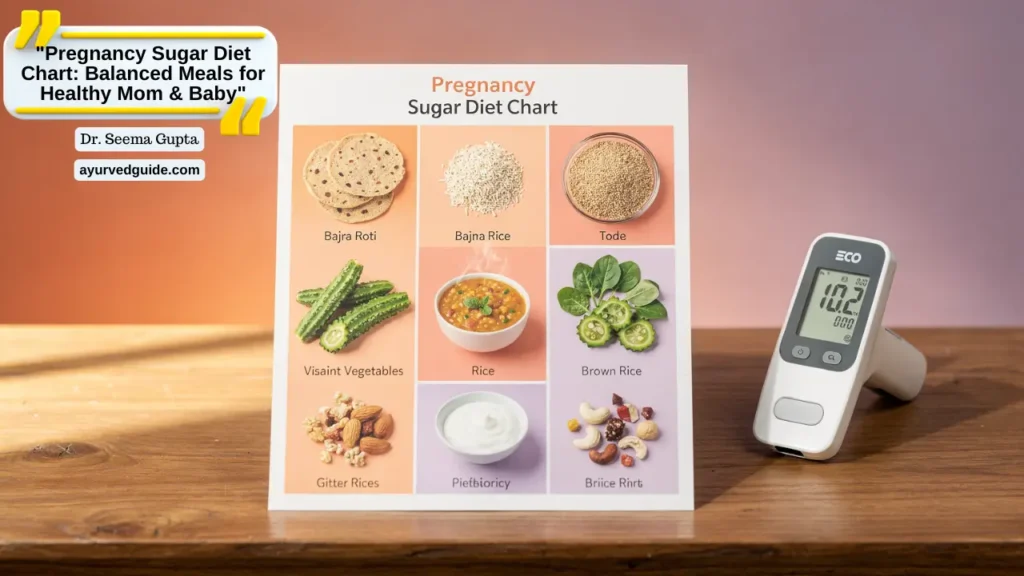
Pregnancy Sugar Diet Chart – Pregnancy is a time of joy and anticipation, but it also brings new responsibilities—especially when it comes to nutrition. Managing sugar intake during pregnancy is crucial, as high blood sugar can lead to complications like macrosomia (a larger-than-average baby) and gestational diabetes.
A sugar-conscious diet not only helps prevent these risks but also supports the health and well-being of both mother and baby. By understanding and following a pregnancy sugar diet chart, expectant mothers can make informed choices that promote stable blood sugar and a smoother pregnancy journey.
2025 Gestational Diabetes Screening Updates
Current guidelines recommend earlier screening for high-risk women (e.g., BMI >25, previous GDM, South Asian ethnicity) at the first prenatal visit, with universal testing at 24–28 weeks via a 75g OGTT. (1) New thresholds: fasting ≥92 mg/dL, 1-hour ≥180 mg/dL, 2-hour ≥153 mg/dL confirm GDM. (2) Early detection reduces macrosomia risk by 50%.(3)
Why Sugar Management Matters During Pregnancy
Gestational diabetes mellitus (GDM) is a type of diabetes that develops during pregnancy, typically in the second or third trimester. It occurs when the body cannot produce enough insulin to meet the increased needs of pregnancy, leading to elevated blood sugar levels. The importance of managing sugar during pregnancy cannot be overstated, as uncontrolled blood sugar can have significant consequences for both mother and baby.
For mothers, gestational diabetes increases the risk of high blood pressure, preeclampsia, and the need for a cesarean section. It can also raise the likelihood of developing type 2 diabetes later in life. For babies, the risks include macrosomia (excessive birth weight), which can complicate delivery and increase the chance of birth injuries. Babies born to mothers with GDM are also at higher risk for low blood sugar (hypoglycemia) after birth, jaundice, and even respiratory distress.
Diet plays a central role in preventing and managing gestational diabetes. Research shows that a balanced, sugar-conscious diet can help maintain healthy blood sugar levels, reducing the need for medication and minimizing complications. By focusing on whole foods, complex carbohydrates, and regular meal timing, mothers can support their own health and give their babies the best possible start.
From a personal perspective, I’ve seen friends and family members navigate the challenges of gestational diabetes. The initial diagnosis can be overwhelming, but with the right dietary guidance, many have successfully managed their blood sugar and delivered healthy babies. It’s reassuring to know that small, consistent changes in eating habits can make a big difference.
In summary, sugar management during pregnancy is not just about avoiding sweets—it’s about creating a balanced, nourishing meal plan that supports both mother and baby. With the right approach, the risks associated with gestational diabetes can be significantly reduced.
Principles of a Pregnancy Sugar Diet Chart
A pregnancy sugar diet chart is designed to help expectant mothers maintain stable blood sugar levels throughout the day. The foundation of this approach lies in meal timing, food choices, and portion control. Here are the key principles to follow:
Frequent Small Meals
Instead of three large meals, it’s recommended to eat three moderate meals and two to three snacks every two to three hours. This pattern helps prevent blood sugar spikes and crashes, providing a steady source of energy for both mother and baby. Personally, I’ve found that eating smaller, more frequent meals can also help with common pregnancy symptoms like nausea and heartburn.
The Diabetes Plate Method
Visualizing your plate can make meal planning easier. The “Diabetes Plate” is a simple tool: fill half your plate with non-starchy vegetables (like spinach, carrots, or beans), one-quarter with lean protein (such as chicken, fish, tofu, or eggs), and one-quarter with whole grains or starchy vegetables (like brown rice, whole wheat roti, or sweet potatoes). This balance ensures you get enough fiber, protein, and healthy carbs without overloading on sugar.
Breakfast deserves special attention. Blood sugar tends to be more sensitive in the morning, so it’s best to keep breakfast carbohydrates under 30 grams. For example, a breakfast of one boiled egg, a small whole wheat toast, and a cup of unsweetened milk fits this guideline.
Choose Complex Carbohydrates and Whole Foods
Not all carbs are created equal. Simple sugars—found in sweets, sugary drinks, and processed foods—cause rapid spikes in blood sugar. Instead, opt for complex carbohydrates like whole grains, legumes, and vegetables. These foods are digested more slowly, leading to gradual increases in blood sugar and longer-lasting energy.
Whole foods are always preferable to processed options. For instance, choose a whole apple over apple juice, or brown rice over white rice. These choices provide more fiber, vitamins, and minerals, supporting overall health during pregnancy.
Exact Carbohydrate Targets and Glycemic Index Focus
2025 guidelines recommend 175g carbs/day minimum, spread as 30–45g meals, 15–30g snacks for optimal fetal growth without spikes.^7^ Prioritize low-GI (<55) foods to blunt rises.
| Meal Type | Recommended Carbs | Examples |
|---|---|---|
| Breakfast | 15–30g | 1 small roti + egg; oats with nuts |
| Mid-Morning Snack | 15g | Apple + 10 almonds |
| Lunch/Dinner | 45–60g | 1 cup brown rice + dal + veg |
| Afternoon/Evening Snack | 15–30g | Yogurt + chia; roasted chana |
| Bedtime | 15–30g | Milk + handful nuts |
Low-GI Indian Foods for GDM
| Food | GI | Serving Suggestion |
|---|---|---|
| Bajra/Jowar Roti | 50–55 | 2 small rotis |
| Moong Dal | 30–40 | ½ cup cooked |
| Rajma/Chole | 35–45 | ½ cup curry |
| Bottle Gourd (Lauki) | <20 | Unlimited in sabzi |
| Methi Leaves | <20 | 1 cup cooked |
Avoid Simple Sugars
It’s important to limit foods and drinks high in added sugars, such as candies, pastries, sweetened beverages, and desserts. These items can quickly raise blood sugar and offer little nutritional value. If you have a sweet tooth, try satisfying it with naturally sweet foods like fresh fruit, but always in moderation.
In essence, the principles of a pregnancy sugar diet chart are about balance, consistency, and making mindful choices. By following these guidelines, expectant mothers can take control of their health and reduce the risks associated with gestational diabetes.
7-Day Meal Plan Examples
Creating a practical and sustainable meal plan is essential for managing gestational diabetes. A balanced 1800–2000 kcal/day plan is typically recommended for most pregnant women, but individual needs may vary. The goal is to provide steady energy, essential nutrients, and stable blood sugar levels throughout the week.
Overview of a Balanced Meal Plan
A well-structured 7-day meal plan for gestational diabetes includes a variety of foods from all food groups. Each day should feature three main meals and two to three snacks, spaced every two to three hours. Meals should be rich in fiber, lean protein, healthy fats, and complex carbohydrates, while keeping added sugars and processed foods to a minimum.
Here’s a sample 7-day menu, with snippets for breakfast, lunch, dinner, and snacks:
Day 1
- Breakfast: 1 boiled egg, 1 small whole wheat toast, 1 cup unsweetened milk (carbs <30g)
- Snack: 1 small apple with 1 tablespoon peanut butter
- Lunch: 1 cup brown rice, 1 cup mixed vegetable curry, 1/2 cup dal, salad
- Snack: 1 cup low-fat yogurt with a sprinkle of chia seeds
- Dinner: 2 whole wheat rotis, 1 cup palak paneer, 1/2 cup cucumber raita
Day 2
- Breakfast: 1 small moong dal chilla, 1/2 cup tomato chutney
- Snack: 1 orange, 10 almonds
- Lunch: 1 cup quinoa, 1 cup rajma (kidney bean curry), salad
- Snack: 1 cup buttermilk, 1 small carrot
- Dinner: 2 bajra rotis, 1 cup mixed vegetable sabzi, 1/2 cup curd
Day 3
- Breakfast: 1 small bowl oats porridge (made with water and a splash of milk), 1/2 banana
- Snack: 1 small pear, 1 tablespoon sunflower seeds
- Lunch: 1 cup millet khichdi, 1/2 cup mixed sprouts salad
- Snack: 1 cup coconut water, 1 small handful roasted chana
- Dinner: 2 jowar rotis, 1 cup lauki (bottle gourd) curry, 1/2 cup curd
Day 4
- Breakfast: 1 small besan (chickpea flour) pancake, 1/2 cup mint chutney
- Snack: 1 cup sliced papaya, 5 walnuts
- Lunch: 1 cup brown rice, 1 cup chole (chickpea curry), salad
- Snack: 1 cup low-fat lassi, 1 small cucumber
- Dinner: 2 whole wheat rotis, 1 cup bhindi (okra) sabzi, 1/2 cup curd
Day 5
- Breakfast: 1 small bowl poha with peas and peanuts, 1/2 cup buttermilk
- Snack: 1 small apple, 1 tablespoon flaxseeds
- Lunch: 1 cup barley pulao, 1 cup mixed vegetable curry, salad
- Snack: 1 cup tomato soup, 1 small handful roasted makhana
- Dinner: 2 bajra rotis, 1 cup methi (fenugreek) aloo, 1/2 cup curd
Day 6
- Breakfast: 1 small upma with vegetables, 1/2 cup unsweetened milk
- Snack: 1 small guava, 10 pistachios
- Lunch: 1 cup brown rice, 1 cup dal tadka, salad
- Snack: 1 cup buttermilk, 1 small carrot
- Dinner: 2 jowar rotis, 1 cup tinda (apple gourd) sabzi, 1/2 cup curd
Day 7
- Breakfast: 1 small idli, 1/2 cup sambar, 1 tablespoon coconut chutney
- Snack: 1 small orange, 1 tablespoon pumpkin seeds
- Lunch: 1 cup millet khichdi, 1/2 cup mixed sprouts salad
- Snack: 1 cup low-fat yogurt, 1 small handful roasted chana
- Dinner: 2 whole wheat rotis, 1 cup baingan bharta (eggplant), 1/2 cup curd
Key Points
- Carbohydrates: Kept consistent and spread throughout the day to avoid spikes.
- Protein: Included in every meal to support growth and satiety.
- Vegetables: Non-starchy vegetables are a staple, providing fiber and nutrients.
- Snacks: Chosen for their ability to stabilize blood sugar and prevent hunger.
From my experience, planning meals ahead and prepping ingredients in advance can make it much easier to stick to a gestational diabetes meal plan. It also helps reduce stress and ensures you always have healthy options on hand.
Smart Eating Strategies
Managing gestational diabetes isn’t just about what you eat—it’s also about how you eat. Smart eating strategies can make a significant difference in maintaining stable blood sugar levels and supporting overall well-being during pregnancy.
Pair Carbohydrates with Protein and Healthy Fats
One of the most effective ways to prevent blood sugar spikes is to pair carbohydrates with protein and healthy fats. For example, instead of eating a plain piece of fruit, add a handful of nuts or a spoonful of nut butter. This combination slows down the absorption of sugar into the bloodstream, leading to more stable energy levels.
Some practical pairings include:
- Whole wheat toast with boiled egg
- Apple slices with peanut butter
- Oats porridge with a sprinkle of chia seeds
- Brown rice with dal and a side of curd
Personally, I’ve noticed that these combinations not only help with blood sugar control but also keep my patients feeling full for longer, reducing the temptation to snack on less healthy options.
Avoid Sugary Drinks and Processed Carbs
Sugary drinks like sodas, sweetened juices, and even some flavored milks can cause rapid increases in blood sugar. It’s best to stick to water, unsweetened herbal teas, or plain buttermilk. If you crave something sweet, try infusing water with slices of lemon, cucumber, or mint for a refreshing twist.
Processed carbohydrates—such as white bread, pastries, and packaged snacks—are quickly digested and can lead to blood sugar spikes. Replace these with whole grains like brown rice, millet, quinoa, and whole wheat roti. These options are higher in fiber and nutrients, supporting better blood sugar control.
Choose Fiber-Rich Foods
Fiber slows the absorption of sugar and improves digestion. Include plenty of vegetables, legumes, whole grains, and seeds in your meals. For example, add a side salad to lunch, sprinkle flaxseeds on yogurt, or enjoy a bowl of vegetable soup as a snack.
Practice Mindful Eating
Eating slowly and paying attention to hunger and fullness cues can help prevent overeating. Try to sit down for meals, chew thoroughly, and savor each bite. This approach not only aids digestion but also makes meals more enjoyable.
Plan and Prepare Ahead
Meal planning and preparation are key to sticking with a gestational diabetes diet chart. Set aside time each week to plan your meals, shop for groceries, and prep ingredients. Having healthy snacks and meals ready to go can make it much easier to avoid unhealthy choices.
Personal Reflection
When I supported a family member through gestational diabetes, we found that keeping a food diary was incredibly helpful. Tracking meals, snacks, and blood sugar readings provided valuable insights and made it easier to identify patterns and make adjustments.
In summary, smart eating strategies are about making thoughtful choices, pairing foods wisely, and planning ahead. These habits can make a big difference in managing gestational diabetes and supporting a healthy pregnancy.
Indian Diet Adaptations
For many Indian women, adapting traditional meals to fit a pregnancy sugar diet chart can feel challenging. However, with a few simple swaps and mindful choices, it’s entirely possible to enjoy familiar flavors while managing blood sugar effectively.
Replace Refined Staples with Whole Grains
Traditional Indian diets often rely on refined grains like white rice and maida (refined flour). These can cause rapid blood sugar spikes. Instead, opt for whole-grain alternatives:
- Roti: Choose whole wheat, bajra (pearl millet), or jowar (sorghum) rotis instead of those made with maida.
- Rice: Replace white rice with brown rice, red rice, or millets like foxtail or barnyard millet.
- Dosa/Idli: Use a mix of whole grains and lentils for batter, and limit portion sizes.
Emphasize Legumes, Vegetables, and Low-Fat Dairy
Legumes like dal, chana, rajma, and moong are excellent sources of protein and fiber. Include a variety of vegetables—especially non-starchy ones like spinach, bottle gourd, okra, and cauliflower—in every meal. Low-fat dairy products like curd, buttermilk, and paneer provide calcium and protein without excess fat.
Use Small Portions and Avoid Sweets
Portion control is crucial. Even healthy foods can raise blood sugar if eaten in large amounts. Serve smaller portions of rice or roti, and fill up on vegetables and salads. Traditional Indian sweets are best avoided, as they are high in sugar and refined carbs. If you crave something sweet, try a small piece of fruit or a homemade dessert made with whole grains and minimal sweetener.
Favor Satiety-Rich Snacks
Snacking is an important part of the pregnancy sugar diet chart. Choose snacks that are high in fiber and protein to keep you full and satisfied:
- Sprout salads with lemon and spices
- Roasted chana or makhana (fox nuts)
- Vegetable soup with a sprinkle of seeds
- Low-fat yogurt with chopped cucumber or mint
Cooking Methods Matter
Opt for steaming, grilling, or sautéing with minimal oil instead of deep-frying. Use spices and herbs to add flavor without extra calories or sugar.
Sample Indian Meal Adaptation
- Breakfast: Moong dal chilla with mint chutney
- Lunch: Brown rice, mixed vegetable curry, dal, salad
- Snack: Roasted chana, buttermilk
- Dinner: Bajra roti, palak paneer, cucumber raita
In conclusion, adapting Indian meals for a gestational diabetes diet chart is about making mindful swaps, controlling portions, and focusing on whole, nutrient-dense foods. With a little creativity, you can enjoy the flavors you love while supporting a healthy pregnancy.
Vegetarian and Vegan Adaptations
GDM diets are easily vegetarian; vegans need B12/iron focus.(10)
| Standard | Vegan Swap | Nutrient Note |
|---|---|---|
| Paneer | Tofu | Same protein; add fortified nutritional yeast for B12 |
| Curd | Coconut/soy yogurt | Probiotics; check unsweetened |
| Egg | Besan chilla | Protein boost; add spinach for iron |
| Milk | Almond/oat milk (fortified) | Calcium/B12; limit sweetened |
References
The following references are provided to support the information in this article. Please note that websites may update, move, or remove pages over time. If any link appears broken, unavailable, or returns a 404 error, it may be due to changes on the source website and not a mistake in this article.
1. ACOG. (2025). Gestational Diabetes Mellitus. https://www.acog.org/clinical/clinical-guidance/practice-bulletin/articles/2025/gestational-diabetes-mellitus
2. ADA. (2025). Standards of Care in Diabetes—Gestational Diabetes. https://diabetesjournals.org/care/issue/48/Supplement_1
3. NICE. (2025). Diabetes in pregnancy. https://www.nice.org.uk/guidance/ng3
4. CDC. (2025). Gestational Diabetes. https://www.cdc.gov/diabetes/basics/gestational.html
5. Diabetes UK. (2025). Gestational diabetes follow-up. https://www.diabetes.org.uk/guide-to-diabetes/life-with-diabetes/gestational-diabetes
Mayo Clinic. (2025). Gestational diabetes diet. https://www.mayoclinic.org/diseases-conditions/gestational-diabetes/in-depth/gestational-diabetes-diet/art-20046987
6. Healthline. (2025). GDM carb counting. https://www.healthline.com/health/gestational-diabetes-diet
7. AJOG. (2025). Exercise in GDM meta-analysis. https://www.ajog.org/article/S0002-9378(25)00001-2/fulltext
8. BabyCenter. (2025). Walking after meals GDM. https://www.babycenter.com/pregnancy/health-and-safety/gestational-diabetes-diet_20001163
9. FirstCry Parenting. (2025). Vegan GDM diet India. https://parenting.firstcry.com/articles/gestational-diabetes-diet-plan-for-vegetarians/
10. Freestyle Libre. (2025). Pregnancy approval. https://www.freestyle.abbott/us-en/pregnancy.html
11. Freestyle Libre. (2025). Pregnancy approval. https://www.freestyle.abbott/us-en/pregnancy.html
12. Lancet Diabetes Endocrinol. (2025). Metformin vs insulin GDM. https://www.thelancet.com/journals/landia/article/PIIS2213-8587(25)00045-6/fulltext
Home Remedies to Lower Pregnancy Sugar Levels
While diet and exercise are the mainstays of managing gestational diabetes, some home remedies can also support healthy blood sugar levels. However, it’s important to consult your healthcare provider before trying any new remedy, especially during pregnancy.
Increase Fiber Intake
Fiber slows the absorption of sugar and helps maintain stable blood sugar levels. Include plenty of vegetables, whole grains, legumes, and seeds in your diet. For example, add a tablespoon of flaxseeds or chia seeds to your yogurt, or enjoy a bowl of vegetable soup as a snack.
Stay Hydrated
Drinking enough water is essential for overall health and can help regulate blood sugar. Aim for at least 8–10 glasses of water per day, unless your doctor advises otherwise. Herbal teas (without added sugar) and coconut water can also be included in moderation.
Gentle Exercise
Physical activity helps the body use insulin more effectively. Simple activities like walking after meals, prenatal yoga, or gentle stretching can make a big difference. Even a 10–15 minute walk after lunch or dinner can help lower post-meal blood sugar.
Structured Exercise Recommendations
30 min moderate activity daily (e.g., brisk walking) reduces insulin needs by 30%.^8^ Post-meal 10–15 min walks lower spikes most effectively.^9^ Safe options: prenatal yoga, swimming.
| Activity | Duration/Frequency | Benefits |
|---|---|---|
| Brisk Walking | 10–15 min post-meal | Immediate glucose drop |
| Prenatal Yoga | 30 min 3–5x/week | Stress reduction + flexibility |
| Swimming | 20–30 min | Low-impact; cools body |
Herbs and Spices
Certain herbs and spices have been traditionally used to support blood sugar control:
- Cinnamon: Some studies suggest that cinnamon may help improve insulin sensitivity. Add a pinch to your oats or smoothies.
- Fenugreek (Methi): Fenugreek seeds are rich in soluble fiber and may help lower blood sugar. Soak a teaspoon of seeds overnight and consume them in the morning, but only after consulting your doctor.
Manage Stress
Stress can affect blood sugar levels. Practice relaxation techniques like deep breathing, meditation, or gentle prenatal yoga to stay calm and centered.
Important Note
Always consult your healthcare provider before starting any home remedy, especially during pregnancy. What works for one person may not be safe or effective for another.
In summary, home remedies can complement a healthy diet and lifestyle, but they should never replace medical advice or prescribed treatment.
When Diet Isn’t Enough: Medication
If targets are unmet after 1–2 weeks of diet/exercise, metformin or insulin is safe (Category B); it reduces complications by 40%. (12) Discuss with doctor—no stigma in needing meds.
Pregnancy Sugar Diet Chart: The Ayurvedic Perspective
In Ayurveda, gestational diabetes (GDM) is understood as an imbalance of Kapha dosha with Ama (toxins) accumulation, often linked to impaired Agni (digestive fire) and excess Madhura Rasa (sweet taste) intake during pregnancy (Garbhini Paricharya). Elevated blood sugar (Madhumeha-like symptoms) arises from heavy, sweet, and oily foods aggravating Kapha, slowing metabolism, and affecting Meda Dhatu (fat tissue).
As Dr. Seema Gupta, BAMS, MD (Naturopathy) with 27+ years in women’s health, I view GDM as a call for Kapha-Pitta pacification through light, bitter-pungent foods, regular routines, and gentle detox to restore Agni and support fetal Ojas (vitality).
This holistic approach complements modern diet charts, preventing macrosomia and ensuring Sukha Prasava (easy delivery). Always consult your Vaidya and obstetrician—Ayurveda supports, not replaces, glucose monitoring.
Ayurveda’s Classification of Foods for Blood Sugar Balance
Ayurveda categorizes foods by Rasa (taste) and Guna (qualities) to guide GDM management:
- Favorable: Tikta (bitter), Katu (pungent), Kashaya (astringent) – reduce Kapha and clear Ama.
- Moderate: Madhura (sweet) from whole sources (e.g., fruits with fiber).
- Avoid: Excess Madhura/ Amla (sour), heavy/oily foods.
Benefits of the Ayurvedic Approach in GDM
Integrating Garbhini Paricharya principles stabilizes blood sugar naturally while nourishing mother and baby.
| Benefit | Ayurvedic Mechanism | Pregnancy Relevance | Suggested Practice |
|---|---|---|---|
| Stable Blood Sugar | Kapha Shamana + Agni Deepana | Prevents spikes; reduces macrosomia risk | Bitter gourd (karela) juice (diluted, ¼ cup morning).^1^ ^2^ |
| Improved Digestion | Pachana (toxin digestion) | Eases bloating/constipation from slowed Agni | Triphala (½ tsp nightly) post-consult.^3^ ^4^ |
| Weight & Fluid Balance | Lekhana (scraping) + Mutrala (diuretic) | Controls edema/GDM weight gain | Barley (yava) water; coriander seeds tea.^5^ ^6^ |
| Fetal Nourishment | Balya + Rasayana | Supports Ojas without excess Meda | Mung dal khichdi with ghee; amla (limited).^7^ |
| Stress Reduction | Medhya (mind-calming) | Lowers cortisol-induced glucose rises | Brahmi tea; daily Abhyanga.^8^ |
Dosha-Specific Guidance for GDM Diet
Tailor per Prakriti and trimester (Masanumasik Pathya).
| Dosha | Imbalance in GDM | Recommended Foods | Avoid | Tips |
|---|---|---|---|---|
| Kapha (Primary) | Excess sweetness/heaviness | Bitter greens (methi, karela), barley, mung | Dairy excess, sweets, rice | Light meals; dry ginger tea.^1^ ^9^ |
| Pitta | Heat + acidity | Cooling grains (bajra), coconut water | Spicy/oily, sour | Shatavari (½ tsp) with milk.^3^ ^10^ |
| Vata | Irregular appetite/dryness | Warm khichdi, ghee, sesame | Cold/dry foods | Ashwagandha (limited, post-1st trimester).^8^ ^11^ |
Precautions in Ayurvedic Context
Avoid strong Lekhana herbs (e.g., high-dose triphala) in 1st trimester; no fasting. Monitor for Ama (coated tongue). Contraindications: Severe Pitta (acidity), high-risk pregnancy—use only under supervision.
Practical Tips
- Meal Timing: Eat every 3 hours; warm, freshly cooked.
- Herbs: Fenugreek soaked water (1 tsp seeds overnight); cinnamon pinch in tea (post-consult).
- Routine: 10-minute post-meal walk; early dinner.
Key Takeaways
Ayurveda’s Garbhini Paricharya transforms GDM management into balanced nourishment—pacifying Kapha, igniting Agni, and protecting Ojas with bitter-pungent-light foods. Combine with modern monitoring for the best outcomes. For a personalized Prakriti plan, WhatsApp Dr. Seema Gupta – 7416000033.
FAQs
Q: Is bitter gourd safe for GDM per Ayurveda?
A: Yes, in moderation—its Tikta Rasa clears Ama and lowers sugar; dilute juice.
Q: Can triphala be taken in pregnancy GDM?
A: ½ tsp nightly (2nd trimester onward) aids digestion; consult Vaidya.
Q: Ayurvedic alternative to rice in GDM?
A: Barley (yava) or millets—Lekhana quality controls Kapha.
When to Consult a Dietitian
If you’re navigating gestational diabetes or have specific dietary restrictions, consulting a registered dietitian is one of the best steps you can take. While general guidelines and sample meal plans are helpful, everyone’s needs are unique—especially during pregnancy.
- Personalized Meal Plans: A dietitian can tailor a pregnancy sugar diet chart to your preferences, cultural background, and nutritional needs. For example, if you follow a vegetarian or Indian diet, they can suggest swaps that keep your meals both satisfying and blood sugar-friendly.
- Glucose Monitoring Support: Managing GDM isn’t just about what you eat—it’s also about how your body responds. A dietitian can help you interpret your glucose readings and adjust your meal plan for gestational diabetes accordingly.
- Special Circumstances: If you have food allergies, intolerances, or other health conditions, professional guidance is even more important. I remember a friend who struggled with both lactose intolerance and GDM; her dietitian helped her find safe, nutritious alternatives that kept her blood sugar stable.
If you ever feel unsure about your diet, or if your blood sugar numbers are consistently outside the target range, don’t hesitate to reach out to a healthcare professional. Early support can make pregnancy smoother and safer.
Practical Monitoring Tools
Use glucometers (e.g., Accu-Chek, Contour Next) 4–7x/day; 2025 CGM (Freestyle Libre) approved for pregnancy in high-risk cases for real-time trends.(11) Targets: fasting <95 mg/dL, 1-hour post <140 mg/dL.
FAQ Section
What is a pregnancy sugar diet chart?
A pregnancy sugar diet chart is a structured eating plan designed to help pregnant women manage their blood sugar levels, especially if they have gestational diabetes. It typically includes:
- Balanced meals with controlled portions of carbohydrates, proteins, and healthy fats
- Regular meal and snack times to prevent blood sugar spikes and drops
- Emphasis on whole grains, lean proteins, vegetables, and limited added sugars
The goal is to keep blood sugar within a healthy range for both mother and baby.
Example of a GDM 7-day meal plan
Here’s a sample 7-day meal plan for gestational diabetes. This plan focuses on balance, variety, and blood sugar control. Adjust portions and ingredients as needed, and always check with your healthcare provider.
| Day | Breakfast | Mid-Morning Snack | Lunch | Afternoon Snack | Dinner | Bedtime Snack |
|---|---|---|---|---|---|---|
| 1 | Oats porridge with nuts | Apple slices | Brown rice, dal, mixed veg | Roasted chana | Grilled chicken, sautéed spinach | Greek yogurt |
| 2 | Whole wheat toast, boiled egg | Handful of almonds | Quinoa pulao, curd | Cucumber sticks | Fish curry, steamed broccoli | Milk |
| 3 | Besan chilla, tomato salsa | Orange segments | Chapati, rajma, salad | Buttermilk | Paneer tikka, stir-fried beans | Small banana |
| 4 | Poha with peas | Walnuts | Millet roti, chicken curry, salad | Sprouts salad | Moong dal khichdi, carrot raita | Cottage cheese |
| 5 | Idli, coconut chutney | Guava | Brown rice, sambar, bhindi | Roasted peanuts | Grilled tofu, mixed veg | Milk |
| 6 | Vegetable upma | Pear | Chapati, chole, salad | Boiled egg | Fish fry, sautéed greens | Yogurt |
| 7 | Dalia with milk, seeds | Papaya | Bajra roti, mixed veg curry | Fruit salad (no added sugar) | Chicken stew, beans | Handful of nuts |
This pregnancy sugar diet chart Indian version includes familiar foods and flavors, making it easier to stick to your gestational diabetes meal plan.
How to reduce sugar levels with home remedies?
While diet and exercise are the mainstays, some home remedies may help support healthy blood sugar levels during pregnancy:
- Stay active: Gentle walks after meals can help lower blood sugar.
- Hydrate: Drinking enough water supports kidney function and glucose regulation.
- Include fiber: Foods like whole grains, lentils, and vegetables slow sugar absorption.
- Cinnamon: Some studies suggest cinnamon may help with blood sugar, but always check with your doctor before adding supplements.
Remember, home remedies should complement—not replace—medical advice and prescribed treatment.
What are normal post-meal blood sugar targets during pregnancy?
Most guidelines recommend the following blood sugar targets for women with gestational diabetes:
- Fasting (before meals): Less than 95 mg/dL (5.3 mmol/L)
- 1 hour after meals: Less than 140 mg/dL (7.8 mmol/L)
- 2 hours after meals: Less than 120 mg/dL (6.7 mmol/L)
Your doctor may set slightly different targets based on your health and pregnancy stage.
How do Indian meals fit into a GDM diet?
Indian cuisine can absolutely fit into a gestational diabetes diet chart. The key is to:
- Choose whole grains (like brown rice, millets, whole wheat) over refined grains
- Limit deep-fried snacks and sweets
- Add plenty of vegetables and lean proteins (dal, paneer, chicken, fish)
- Watch portion sizes, especially for rice, rotis, and starchy vegetables
I’ve seen many families successfully adapt their favorite recipes—like making dosa with more lentils and less rice, or swapping white rice for brown. It’s all about small, sustainable changes.
Postpartum Follow-Up and Long-Term Health
After delivery, 50–70% of GDM women develop type 2 diabetes within 10 years.(4) Schedule a 75g OGTT at 4–12 weeks postpartum; if normal, retest every 1–3 years.(5) Breastfeeding lowers risk by 30%; maintain diet/exercise.(6)-
Conclusion
A pregnancy sugar diet chart is a practical tool for managing gestational diabetes and supporting a healthy pregnancy. The best approach combines balanced meals, regular glucose monitoring, and professional guidance. Whether you’re following a 7-day meal plan for gestational diabetes or adapting your favorite Indian dishes, remember that moderation and variety are key.
Your health and your baby’s well-being are worth every effort. Keep tracking your blood sugar, stay in touch with your healthcare team, and don’t be afraid to ask for help. With the right support, you can enjoy a healthy, happy pregnancy.
Read More: Pregnancy Sugar Diet ChartExplore related pregnancy nutrition and wellness topics:
- Ragi During Pregnancy First Trimester
Low-GI grain for stable blood sugar. - Grapes and Pregnancy
Safe fruits and sugar considerations. - Is Garlic Good for Pregnancy?
Spices for digestion and immunity. - Can Pregnant Women Eat Mushrooms?
Nutrient-rich low-carb options. - Jackfruit for Pregnant Women: Safe or Harmful?
High-fiber fruit alternatives. - Pregnancy Diet Meal Plan
Overall balanced eating guide. - Sukumara Ghrita for Pregnancy
Ayurvedic nourishment support. - Craving for Maggi During Pregnancy
Managing processed food cravings. - Healthy Pregnancy Weight Gain by Trimester
Weight and sugar balance tips. - Ultimate Guide to Ayurvedic Women’s Health
Holistic pregnancy wellness.

Dr. Seema Gupta, BAMS, MD (Naturopathy) is an Ex-House Physician in Gynecology and Obstetrics who is Advanced Certified in Diet and Nutrition. with over 27 years of experience in Women’s Health, Ayurveda, Naturopathy, and Diet, she has empowered 70,000+ patients to achieve natural healing. Her expertise in Gynecology and Obstetrics ensures personalized, science-backed advice.