
Medically Reviewed & Updated – November 2025
Dr Garima Thakur, MBBS, IGMC Shimla
Junior Resident, Department of Pediatrics
Postgraduate Institute of Medical Education and Research (PGIMER), Chandigarh
Evidence-based medical information in this article is in accordance with current guidelines from:
• FOGSI (Federation of Obstetric and Gynaecological Societies of India)
• RCOG (Royal College of Obstetricians and Gynaecologists, UK)
• WHO (World Health Organization)
Ayurvedic and holistic recovery suggestions are contributed by
Dr Seema Gupta, BAMS, MD (Naturopathy)
Women’s Health & Ayurveda Specialist | 27+ years of clinical experience
The “pregnancy mask” refers to dark patches on the face caused by hormonal changes during pregnancy. This condition, medically known as melasma or chloasma, affects up to 70% of pregnant women and typically shows up as brownish patches on the cheeks, forehead, and upper lip.
While completely harmless to both mother and baby, it can cause cosmetic concerns. This comprehensive guide explains what a pregnancy mask looks like, why it occurs, when it appears, safe treatment options during pregnancy, and what you can expect after delivery.
Dr Seema Gupta — Specialist in women’s health & naturopathy, guiding safe skincare during and after pregnancy.
What Exactly Is the Pregnancy Mask?
Definitions: Melasma, Chloasma & “Mask of Pregnancy”
The pregnancy mask goes by several medical names, each describing the same condition with slight variations. Melasma is the broader medical term for hyperpigmentation that causes dark patches on the skin due to increased melanin production. When this condition occurs specifically during pregnancy, it’s often called chloasma or the more common term “mask of pregnancy.”
What is a pregnancy mask called in medical terms? Healthcare providers typically use “melasma” as the primary diagnosis, while “chloasma” refers explicitly to melasma that develops during pregnancy or while taking hormonal contraceptives. The term “pregnancy mask” became popular because the dark patches often appear across the face in a mask-like pattern, particularly around the cheeks and forehead.
Understanding what melasma is during pregnancy helps clarify that it is simply a temporary skin change caused by your body’s natural response to pregnancy hormones. The condition affects the melanocytes (pigment-producing cells) in your skin, causing them to produce more melanin than usual.
Prevalence and Who It Affects Most
While melasma is a common skin condition, its prevalence varies across studies and populations. Globally, it affects 15-70% of pregnant women, with higher rates (up to 75%) in those with darker skin tones or in sunny climates [1][2]. This wide range reflects factors like genetics and location— for instance, studies show rates as low as 15-50% in general populations but climbing to 36-75% among women of Hispanic, Asian, or African descent [1][2].
Here’s a quick stat overview:
| Demographic Factor | Prevalence Rate | Key Insight |
|---|---|---|
| Overall Pregnancies | 15-50% | Most common in second/third trimesters [1] |
| Darker Skin Tones (Fitzpatrick III-VI) | 36-75% | Higher melanin baseline makes skin more responsive to hormones [2] |
| Sunny Climates (e.g., Tropical Regions) | Up to 70% | UV exposure amplifies risk [1] |
| Family History Present | 2-3x Higher | Genetic predisposition plays a significant role [3] |
Understanding these stats can normalize your experience—it’s your body’s way of adapting, not a flaw.
What Does It Look Like & Where It Appears
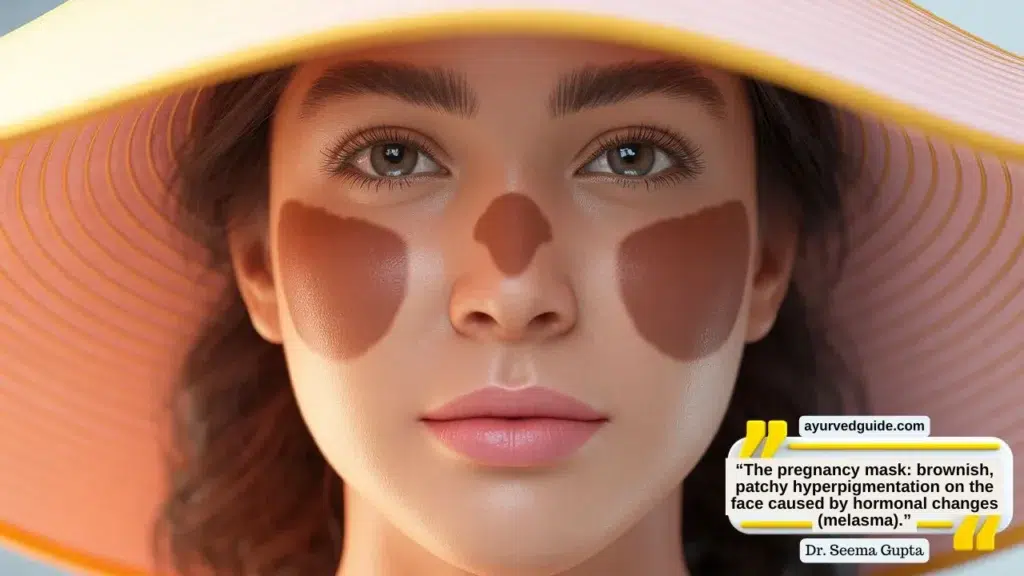
What does a pregnancy mask look like? The pregnancy mask typically appears as symmetrical, brownish patches that range from light tan to dark brown. These patches have irregular borders and usually occur on both sides of the face in a mirror-image pattern.
The most common areas where pregnancy mask appears include:
- Cheeks and cheekbones – often the first and most noticeable area
- Forehead – particularly the centration
- Upper lip area – creating a moustache-like appearance
- Bridge of the nose – connecting the patches across both cheeks
- Chin – less common but can occur
The appearance of a pregnancy mask varies among individuals. Some women develop light, barely noticeable patches, while others experience darker, more prominent discolouration. The patches are typically flat and don’t cause any physical discomfort, itching, or pain.
Pregnancy mask pictures often show the characteristic butterfly pattern across the cheeks and the nose bridge. The intensity can vary throughout pregnancy, sometimes darkening during specific trimesters and potentially lightening as hormones fluctuate.
When Does It Typically Appear?
When does pregnancy mask appear during the pregnancy journey? Most women first notice pregnancy mask symptoms during the second trimester, typically between weeks 1 and -20 of pregnancy. However, some women may experience early signs during the first trimester, particularly if they have risk factors such as previous melasma or family history.
The timing of when the mask of pregnancy appears is closely linked to hormonal changes. As estrogen and progesterone levels rise during pregnancy, they trigger increased melanin production. This process doesn’t happen overnight – the patches usually develop gradually over several weeks.
Mask of pregnancy, when it appears, can also be influenced by sun exposure. Many women notice their patches becoming darker or more noticeable after spending time outdoors, even with brief sun exposure. This is why pregnancy masks often become more apparent during summer months or after vacations in sunny locations.
Some women don’t develop pregnancy mask until their third trimester, while others may not notice it until after delivery, when hormone levels are changing again. The condition can persist for months or even years after childbirth in some cases.
Causes, Myths & Risk Factors
What Causes a Pregnancy Mask?
What causes a pregnancy mask involves a complex interaction of hormonal changes, genetic factors, and environmental triggers. The primary cause is the dramatic increase in pregnancy hormones, particularly estrogen and progesterone, which stimulate melanocyte activity in the skin.
During pregnancy, your body produces significantly higher levels of melanocyte-stimulating hormone (MSH), which directly tells your pigment-producing cells to create more melanin. This increased melanin production is your body’s natural response to protect your skin, but it can result in uneven pigmentation, leading to the leading causes of pregnancy mask, including:
- Hormonal fluctuations – elevated estrogen, progesterone, and MSH levels
- Genetic predisposition – family history of melasma increases your risk
- UV radiation exposure – sun exposure triggers and worsens existing patches
- Skin type – women with naturally darker skin tones are more susceptible
- Previous hormonal changes – history of melasma from birth control pills
The mask of pregnancy also involves the interaction between these hormones and sun exposure. Even minimal UV exposure can trigger melanin production in hormonally sensitive skin, which is why a pregnancy mask often appears on sun-exposed areas of the face.
The Science Behind the Hormones
Diving deeper, the hormonal surge isn’t random—it’s a precise (if sometimes overzealous) response. During pregnancy, especially in the third trimester, estrogen and progesterone skyrocket, along with melanocyte-stimulating hormone (MSH) [7]. This trio signals your skin’s melanocytes (pigment factories) to ramp up melanin production for “protection” against UV— but it can overshoot, creating those uneven patches [7].
Key mechanisms at play:
- Hormonal Overdrive: Estrogen binds to receptors in skin cells, boosting tyrosinase (the enzyme that makes melanin) by up to 2-3 times [3].
- UV + Hormone Synergy: Even brief sun exposure activates free radicals, which hormones make your skin extra sensitive to [8].
- Genetic Switch: If you have variants in pigment-regulating genes (e.g., MC1R), hormones flip the switch faster [3].
It’s like your skin’s getting a temporary “summer mode” upgrade—fascinating, but frustrating when it lingers.
Risk Factors: Who Is More Likely?
Certain factors increase your likelihood of developing pregnancy mask. Understanding these risk factors helps you take preventive measures and know what to expect.
Skin tone and ethnicity play a significant role in the development of pregnancy mask. Women with naturally darker skin tones, including those of Hispanic, Asian, African, or Middle Eastern descent, have higher rates of melasma during pregnancy. This occurs because their skin naturally produces more melanin and has more active melanocytes.
Family history is another strong predictor. If your mother, sisters, or other female relatives experienced pregnancy mask, you’re more likely to develop it yourself. This genetic component suggests that some women inherit skin that’s more sensitive to hormonal changes.
Previous melasma experience significantly increases your risk. Women who developed melasma while taking birth control pills or hormone replacement therapy are much more likely to experience pregnancy mask. This indicates that your skin is exceptionally responsive to hormonal fluctuations.
Sun exposure habits also influence your risk level. Women who spend significant time outdoors, live in sunny climates, or have a history of sunburns may be more susceptible to developing pregnancy mask during pregnancy.
Expanded Risk Factors Table
Beyond the basics like skin tone and family history, several modifiable and non-modifiable factors influence your chances of developing pregnancy mask. Knowing them empowers prevention—think of it as your personal risk radar.
| Risk Factor | Description | How to Mitigate |
|---|---|---|
| Multiparity (2+ Pregnancies) | Women with multiple pregnancies face higher odds, with rates up to 3-5% diagnosis per pregnancy [4] | Consistent sun protection across all pregnancies |
| Maternal Age | Risk increases ~8% per year of age at first birth [5]. Early skincare | e habits, regardless of age |
| Nutritional Deficiencies | Low zinc or vitamin D levels (common in pregnancy) can worsen pigmentation [3] | Prenatal vitamins with antioxidants; consult your doctor |
| Stress & Sleep Disruption | Elevated cortisol from pregnancy stress may trigger melanocytes [6] | Gentle routines like prenatal yoga |
| Environmental Triggers | Pollution, heat, or even visible light (e.g., from screens) beyond UV [3] | Indoor UV filters; antioxidant-rich diet |
These aren’t destiny—many women with multiple risks never develop it, thanks to proactive care [3].
Myth: Does It Indicate Boy or Girl?
One persistent myth asks, Does a pregnant woman’s pregnancy mask indicate a boy or a girl? Many people believe that developing melasma during pregnancy means you’re carrying a boy, while others claim it indicates a girl. However, there is absolutely no scientific evidence supporting any connection between pregnancy masks and your baby’s gender.
The myth about the mask of pregnancy, boy or girl, likely stems from old wives’ tales that attempt to predict baby gender based on various pregnancy symptoms. Some versions claim that a pregnancy mask means you’re having a girl because female hormones are supposedly causing the skin changes. Others argue the opposite, suggesting that carrying a boy creates different hormonal patterns.
What does pregnancy mask mean for your baby’s gender? Simply nothing at all. Predictions about melasma during pregnancy and boy-or-girl predictions have no medical basis. The hormonal changes that cause pregnancy occur regardless of whether you’re carrying a male or female baby.
The development of pregnancy mask depends entirely on your individual hormonal response, genetic factors, and environmental exposures – not your baby’s gender. Both estrogen and progesterone levels rise significantly during all pregnancies, creating the hormonal environment that can trigger melasma.
Does It Only Affect the Face?
While facial melasma is most common, pregnancy mask can appear on other parts of your body. A pregnancy mask for areas beyond the face includes any location where hormonal changes and sun exposure combine to trigger excess pigmentation.
Common areas for pregnancy-related hyperpigmentation include:
- Neck and décolletage – particularly in women who wear low necklines
- Forearms – especially the outer surfaces that get sun exposure
- Shoulders and upper back – areas exposed during summer clothing
- Hands – the back of the hands and fingers can develop patches
What is a condition of pigmentation, sometimes called a pregnancy mask, extends to the linea nigra – the dark vertical line that appears on many pregnant women’s bellies. While technically different from facial melasma, it’s caused by the exact hormonal mechanisms.
Pregnancy mask on neck areas often goes unnoticed initially because the patches may be lighter or covered by clothing. However, these areas can darken significantly with continued sun exposure during pregnancy.
How to Treat & Manage the Pregnancy Mask
SafeSkincare During Pregnancy
Managing pregnancy mask safely requires understanding which treatments are appropriate during pregnancy and which should be avoided until after delivery and breastfeeding. The primary focus during pregnancy should be on prevention and gentle care rather than aggressive treatment.
Daily sun protection is the crucial step in pregnancy mask treatment. Apply broad-spectrum SPF 30 or higher sunscreen every morning, regardless of weather or season. Reapply every two hours when outdoors, and don’t forget often-missed areas like your neck, ears, and the back of your hands.
Gentle cleansing routines help maintain healthy skin without irritation. Use mild, fragrance-free cleansers that won’t strip your skin’s natural barrier. Avoid harsh scrubs, exfoliating brushes, or any products that cause redness or irritation, as this can worsen pigmentation.
Safeskincare ingredients during pregnancy include:
- Vitamin C serums – antioxidant protection and gentle brightening
- Niacinamide – reduces inflammation and supports skin barrier function
- Azelaic acid – mild exfoliation and pigmentation improvement
- Kojic acid – gentle lightening properties (use with caution and patch test)
- Physical sunscreens – zinc oxide and titanium dioxide are the safest options
Ingredients to avoid during pregnancy include retinoids, hydroquinone, high-concentration chemical peels, and any treatments that cause significant skin irritation.
Natural & Ayurvedic Approaches (Dr Seema Gupta)
As a specialist in women’s health and naturopathy, I often recommend gentle, natural approaches for managing pregnancy masks that support your skin’s health without potentially harmful chemicals.
Cooling and soothing treatments can help calm hormonally sensitive skin. Pure aloe vera gel applied directly from the plant provides natural anti-inflammatory benefits and helps maintain skin hydration. Keep aloe vera gel in the refrigerator for an extra cooling effect that feels wonderful on pregnancy-warmed skin.
Traditional Ayurvedic ingredients offer gentle support for pigmentation concerns. A weekly face mask made from organic turmeric powder mixed with yoghurt or honey can provide mild brightening benefits. Always perform a patch test first, as some women develop sensitivity to Turmeric during pregnancy.
Dietary approaches support healthy skin from within. Focus on foods rich in vitamin C (citrus fruits, berries, leafy greens), vitamin E (nuts, seeds, avocados), and antioxidants (colourful vegetables and fruits). Staying well-hydrated with plenty of water helps maintain healthy skin cell turnover.
Gentle herbal treatments include:
- Rose water toner – balances skin pH and provides gentle hydration
- Green tea compresses – antioxidant-rich and anti-inflammatory
- Oatmeal masks – gentle exfoliation and soothing properties
- Coconut oil massage – maintains skin barrier function and provides nourishment
These natural approaches work slowly and gently, making them ideal for pregnancy when patience and safety are priorities.
What To Expect After Delivery
Does pregnancy mask go away after delivery? This is one of the most common questions women have about post-pregnancy skin changes. The answer varies significantly between individuals, but understanding typical patterns helps set realistic expectations.
Immediate postpartum changes (0-3 months): Right after delivery, your hormone levels drop dramatically, which can initially make pregnancy mask appear more noticeable. This is temporary and occurs because the contrast between pigmented and normal skin becomes more apparent as overall skin tone changes.
Short-term improvements (3-6 months): Many women begin noticing a gradual fading of their pregnancy mask during this period. The patches often become lighter and less defined as hormone levels stabilize and your skin’s natural renewal process continues.
Longer-term outcomes (6-12 months): Most women who experience significant fading will see the majority of improvement within the first year postpartum. However, complete resolution is not guaranteed, and some women retain mild pigmentation permanently.
Factors affecting recovery include:
- Continued sun protection – essential for preventing darkening and allowing fading
- Breastfeeding can delay complete resolution due to continued hormonal fluctuations
- Subsequent pregnancies often cause the pregnancy mask to return, sometimes more severely
- Individual skin characteristics – genetic factors influence how quickly pigmentation fades
Will pregnancy mask go away completely? While many women see significant improvement, some degree of pigmentation may persist long-term, especially without proper sun protection and professional treatment.
Postpartum Treatment Timeline
While natural fading is the goal, targeted treatments can accelerate results once you’re past pregnancy and breastfeeding. Start gentle, then layer in pros if needed. Here’s a phased guide:
| Timeframe | Focus | Treatment Options | Notes |
|---|---|---|---|
| 0-3 Months (Immediate Postpartum) | Protection & Patience | Broad-spectrum SPF daily; azelaic acid (safe if breastfeeding) [9] | Hormostabilize—patches may temporarily darken before lightening [7] |
| 3-6 Months | Gentle Actives | Hydroquinone (2-4% cream, 3 months max); vitamin C + niacinamide serums [10][9] | 50-70% see noticeable fade; avoid if nursing [10] |
| 6-12 Months | Advanced Interventions | Retinoids (e.g., tretinoin); chemical peels (glycolic acid) [11][12] | Ideal for stubborn spots; consult derm for skin type match [11] |
| 12+ Months | Maintenance | Low-fluence lasers (e.g., Q-switched Nd:YAG); tranexamic acid oral/topical [13][12] | Up to 80% improvement; prevents recurrence [13] |
Always patch-test and get your doctor’s green light—safety first for new-mom skin [9].
Myth vs Reality: Does It Ever Go Away For Good?
The question “Does the mask of pregnancy go away?” doesn’t have a simple yes-or-no answer. Understanding the realistic expectations helps you make informed decisions about treatment and prevention.
Reality of natural fading: Studies show that approximately 70% of women experience significant lightening of their pregnancy mask within one year of delivery. However, “significant lightening” doesn’t necessarily mean complete disappearance. Many women retain subtle pigmentation that’s only noticeable to them or in certain lighting conditions.
Factors that improve outcomes:
- Consistent sun protection -the most critical factor for both prevention and treatment
- Early intervention – addressing pigmentation soon after it appears typically yields better results
- Professional treatment – dermatological therapies can significantly improve stubborn pigmentation
- Lifestyle factors – maintaining hormonal balance through healthy sleep and stress management
Recurrence Realities and Stats
Yes, it often fades—but “often” means about 70% of women see significant lightening within a year [1]. The catch? Up to 30% of cases persist long-term (even 10+ years), especially without sun vigilance, and prior history makes recurrence 44 times more likely in future pregnancies [2][14].
Reality check:
- Natural Resolution: 70% significant fade by month 12; full clearance in ~50% [1].
- Persistent Cases: 20-30% retain mild patches, often on cheeks [2].
- Recurrence Risk: 50% in subsequent pregnancy; sun exposure doubles odds [14].
The good news? With habits like daily SPF, you control the narrative—turning “mask” into “memory.”
Long-term management often involves accepting that pregnancy mask may be a permanent change that requires ongoing management rather than expecting complete elimination. This perspective helps many women develop realistic skincare routines and treatment expectations.
Treatment after breastfeeding opens up more aggressive options like prescription retinoids, hydroquinone, chemical peels, and laser treatments that can significantly improve persistent pigmentation.
Next Steps & Resources
Quick Self-Care Checklist
Taking daily action to manage and prevent pregnancy mask doesn’t require complicated routines or expensive products. This practical checklist helps you establish protective habits that make a real difference.
Morning routine essentials:
- Apply broad-spectrum SPF 30+ sunscreen to face, neck, and any exposed areas
- Use a gentle, pregnancy-safe cleanser followed by a moisturizer
- Wear a wide-brimmed hat when going outdoors
- Choose makeup with additional SPF protection when desired
Throughout the day:
- Reapply sunscreen every two hours during outdoor activities
- Seek shade during peak sun hours (10 AM – 4 PM)
- Wear sunglasses to protect the delicate eye area
- Stay hydrated with plenty of water
Evening routine:
- Cleanse gently to remove sunscreen and daily buildup
- Apply pregnancy-safe treatments like vitamin C serum or niacinamide
- Use nourishing moisturizers to support skin barrier function
- Take progress photos in consistent lighting to track changes
Weekly monitoring:
- Photograph your skin in the same lighting and position each week
- Note any changes in pigmentation intensity or new areas of darkening
- Assess whether your current routine is helping or if adjustments are needed
- Schedule regular check-ins with your healthcare provider if changes seem rapid or concerning
When to seek professional help:
- Patches appear suddenly or spread rapidly
- Pigmentation becomes significantly darker despite sun protection
- You experience itching, pain, or other unusual symptoms
- Patches appear in areas not typically associated with melasma
How I (Dr Seema Gupta) Can Help
My approach to pregnancy mask combines evidence-based medical knowledge with gentle, natural therapies that support your skin’s health throughout pregnancy and beyond. Having guided hundreds of women through pregnancy-related skin changes, I understand both the physical and emotional aspects of dealing with melasma.
Personalized care consultations help you develop a routine tailored to your skin type, pregnancy stage, and lifestyle. I evaluate your current products, identify potential irritants or ineffective ingredients, and recommend safe, effective alternatives that work with your budget and preferences.
Integrative postpartum skin renewal plans bridge the gap between pregnancy limitations and more aggressive treatments available after breastfeeding. These plans typically include a graduated approach that begins with gentle natural therapies and progresses to medical-grade options as appropriate.
Safe product recommendations eliminate the gguesswork rom pregnancy sshopping I maintain an updated database of pregnancy-safe ingredients and products that have demonstrated real results for melasma management, with no potential risks to you or your baby.
Ongoing support and monitoring throughout your pregnancy and postpartum journey ensure that your treatment plan evolves with your changing needs. Many women find that having professional guidance helps them feel more confident about their skincare choices and more patient with the gradual improvement process.
Holistic approaches that address underlying factors such as stress, nutrition, and hormonal balance often yield better long-term results than topical treatments alone. I work with you to identify lifestyle factors that may be contributing to your skin concerns.
References
[1] Clinical Advisor. “Role of Primary Care in the Prevention of Melasma.” August 30, 2023. https://www.clinicaladvisor.com/features/role-of-primary-care-prevention-melasma/
[2] PubMed. “Prevention of Melasma During Pregnancy: Risk Factors…” October 15, 2024. https://pubmed.ncbi.nlm.nih.gov/39430643/
[3] American Academy of Dermatology. “Melasma: Causes.” February 15, 2022. https://www.aad.org/public/diseases/a-z/melasma-causes
[4] JAAD. “A case-control study of racial differences in melasma risk factors…” May 7, 2024. https://www.jaad.org/article/S0190-9622%2824%2900703-5/fulltext
[5] UpToDate. “Melasma: Epidemiology, pathogenesis…” August 18, 2023. https://pearlgrimesmd.com/wp-content/uploads/2023/09/Melasma_-Epidemiology-pathogenesis-clinical-presentation-and-diagnosis-UpToDate.pdf
[6] Cary OBGYN. “Pregnancy Melasma: Understanding and Managing…” November 17, 2024. https://caryobgyn.com/pregnancy-melasma-understanding-and-managing-the-mask-of-pregnancy/
[7] NCBI StatPearls. “Melasma.” https://www.ncbi.nlm.nih.gov/books/NBK459271/
[8] NIH PMC. “Prevention of Melasma During Pregnancy…” October 15, 2024. https://pmc.ncbi.nlm.nih.gov/articles/PMC11490249/
[9] BabyCenter. “Melasma on face: How to treat chloasma postpartum.” https://www.babycenter.com/baby/postpartum-health/postpartum-skin-chloasma_1152262
[10] Vinmec. “Will Postpartum melasma go away on its own?” December 29, 2024. https://www.vinmec.com/eng/blog/postpartum-melasma-will-go-away-on-its-own-en
[11] Balcones Dermatology. “Post-Pregnancy Melasma: 3 Effective Treatment Options.” https://www.balconesdermatology.com/blog/post-pregnancy-melasma-3-effective-treatment-options
[12] Cleveland Clinic. “Melasma: Treatment, Causes & Prevention.” July 27, 2020. https://my.clevelandclinic.org/health/diseases/21454-melasma
[13] Kin Fertility. “How to Treat Melasma aka Pregnancy Mask.” September 30, 2024. https://kinfertility.com.au/blog/melasma-pregnancy
[14] Healthline. “Melasma in Pregnancy: Treatment and Causes.” April 30, 2021. https://www.healthline.com/health/pregnancy/melasma-pregnancy
Ayurvedic Perspective on Pregnancy Mask (Melasma)
In Ayurveda, the “pregnancy mask”—known as Vyanga in classical texts such as the Charaka Samhita and Sushruta Samhita—is a skin condition characterized by dark, irregular patches of hyperpigmentation that often appear on the face during pregnancy.
This is not viewed as a mere cosmetic issue but as a manifestation of internal imbalances in the body’s fundamental energies, or doshas, particularly an aggravation of Pitta dosha. Ayurveda sees the skin (Twak) as a mirror of overall health, reflecting deeper disharmonies in digestion (Agni), detoxification (Ama clearance), and hormonal equilibrium (Artava).
During pregnancy (Garbha), the body undergoes profound transformations to nurture new life, and Vyanga arises as the skin’s response to these shifts, signalling a need for gentle restoration rather than aggressive intervention.
It’s considered benign and often self-resolving postpartum, but proactive care can prevent worsening and promote radiant, balanced skin (Tvak Prakriti).
This viememphasisesistic healing: balancing the doshas through diet, herbs, lifestyle, and therapies to purify the blood (Rakta Shodhana), cool excess heat, and rejuvenate tissues (Rasayana). Below, we explore this in detail, drawing from timeless Ayurvedic wisdom tailored to pregnancy.
Causes of Pregnancy Mask in Ayurveda
Ayurveda attributes Vyanga to an accumulation of Ama (toxins) and aggravated Pitta, which disrupts melanin production and leads to uneven pigmentation. Pregnancy amplifies this due to elevated Rakta (blood) and Artava (reproductive tissue) levels, creating a fertile ground for imbalance.
Key causes include:
- Dosha Aggravation: Primarily Pitta vitiation, which governs heat, transformation, and pigmentation. Excess Pitta from hormonal surges (such as rising estrogen and progesterone) stimulates Bhrajaka Pitta (the sub-dosha for skin lustre), leading to overactive melanocytes.
- External Triggers: Intense sun exposure (Surya Kirana) or heat, which further ignites Pitta and impairs Rakta Dhatu (blood tissue) purity.
- Internal Factors: Stress (Chinta), poor digestion (Mandagni), or toxin buildup from improper diet, leading to Rakta Dushti (impure blood).
- Pregnancy-Specific: The Garbha (fetus) draws on maternal Ojas (vital essence), temporarily weakening Dhatus (tissues) and making skin more susceptible. Genetic Prakriti (constitution) plays a role—if your baseline is Pitta-dominant, pregnancy hormones can tip the scales.
Unlike random occurrences, Ayurveda sees it as preventable through seasonal and lifestyle alignment, especially during Varsha (monsoon) or Grishma (summer), when Pitta naturally rises.
Symptoms and Identification
Vyanga presents as symmetrical, brownish-grey patches (Kali Varna), often in a “mask-like” pattern across sun-exposed areas. Symptoms align with Pitta excess: warmth, slight inflammation, or sensitivity without pain or itching. Common sites:
- Cheeks (Gandashala)
- Forehead (Lalaata)
- Upper lip (Oshtha)
- Nose bridge (Nasa Moola)
In pregnancy, patches may darken progressively from the second trimester onward, fading naturally as Dosha equilibrium returns postpartum. Ayurveda differentiates it from Kapha-related dullness or Vata-induced dryness via pulse diagnosis (Nadi Pariksha) or skin assessment.
Dosha Involvement: The Role of Pitta
At its core, pregnancy mask stems from Pitta Dosha imbalance, the fiery energy of metabolism and transformation. Bhrajaka Pitta, residing in the skin, is particularly affected, leading to excess heat (Ushna) that unevenly “cooks” pigments. Secondary Vata (from stress) or Kapha (from sluggish detox) can compound it, but Pitta is the primary culprit—think of it as an internal “summer” during pregnancy’s warmth. Balancing Pitta through cooling (Sheetala) practices restores Twak Sattva (skin purity).
Ayurvedic Treatments for Pregnancy Mask
Ayurveda’s approach is gentle, non-invasive, and pregnancy-safe, focusing on Shodhana (detox), Shamana (pacification), and Rasayana (rejuvenation). Treatments are personalised based on the Prakriti assessment, emphasising external applications over internal herbs during pregnancy to avoid any Garbha impact. Always consult a qualified Vaidya (Ayurvedic practitioner).
Internal Treatments (Mild and Supervised):
- Herbal decoctions (Kwath), such as Sariva or Manjistha tea, to purify Rakta and calm Pitta (1-2 cups daily, post-meals).
- Churna (powders) such as Triphala for mild detox, supporting digestion without overwhelming the system.
External Treatments:
- Mukhalepam (Herbal Face Packs): A cornerstone therapy for pregnant women—cooling pastes applied for 20-30 minutes, 2-3 times weekly. They exfoliate gently, draw out toxins, and brighten without chemicals.
- Abhyanga (Oil Massage): Light facial massage with Kumkumadi Tailam (saffron-infused oil) to nourish and balance Pitta.
- Jalaukavacharana (Leech Therapy): For stubborn postpartum cases; medicinal leeches (Jalauka) extract impure blood, reducing pigmentation via natural enzymes (safe under expert guidance; avoided in active pregnancy).
Here’s a table of key pregnancy-safe remedies:
| Remedy Type | Key Ingredients | Application | Benefits | Frequency |
|---|---|---|---|---|
| Face Pack (Mukhalepam) | Sandalwood powder + poTurmericose water + TurmericTurmeric | o paste; apply to face, rinse after 20 min | Cools Pitta, lightens spots, hydrates | 2-3x/week |
| Overnight Mask | Aloe Vera gel + Almond oil | Massage gently; wash in the morning | Soothes inflammation, promotes even tone | Daily |
| Brightening Paste | Turmeric + Lemon juice (diluted) | Apply for 15 min; rinse | Anti-inflammatory, natural bleach | 3-4x/week |
| Oil Massage | Kumkumadi Tailam | Warm oil; gentle facial rub | Rejuvenates Twak, reduces heat | Evening, 2x/week |
Key Herbs for Pregnancy Mask:
Ayurveda favours blood-purifying (Rakta Shodhak) and cooling herbs. Use topically or in teas under supervision:
| Herb (Sanskrit/English) | Properties | Usage in Pregnancy Mask | Dose | Precautions |
|---|---|---|---|---|
| Manjistha (Rubia cordifolia) | Blood purifier, Pitta pacifier | Tea or paste for spots | Internal: 1 tsp (3g) powder twice daily in decoction (boil in 200ml water, reduce to 50ml); Topical: Paste as needed | Mild doses only; avoid high internal use in first trimester; consult Vaidya for Garbha safety |
| Chandan (Sandalwood) | Cooling, anti-inflammatory | Face packs with rose water | Topical: 1/2 tsp (2-3g) powder mixed in paste, apply 15-20 min, 2-3x/week | Topical only; hydrating for dry skin; no internal use in pregnancy |
| Haridra (Turmeric) | Varnya (complexion enhancer), antioxidant | Golden milk or masks | Internal: 1/2 tsp (2g) in warm milk daily; Topical: 10g powder in 50g aloe paste, apply 20 min daily | Organic; patch test for sensitivity; culinary amounts safe, limit to 2g/day in pregnancy |
| Kumari (Aloe Vera) | Soothing, rejuvenative | Gel direct on patches | Topical: Fresh gel from leaf, apply liberally 1-2x daily; Internal: 10-20ml juice if needed | Fresh leaf preferred; safe and gentle topically; avoid oral laxative doses in pregnancy |
| Sariva (Indian Sarsaparilla) | Detoxifier, hormone balancer | Infusion for hydration | Internal: 3-6g root powder in decoction twice daily (boil in 400ml water, reduce to 100ml); Topical: Root paste as needed | Supports Garbha without overstimulation; mild use, monitor for allergies |
| Nimba (Neem) | Antimicrobial, purifying | Paste for inflammation | Internal: 1 tablet (500mg) of extract twice daily if in formulation; Topical: Leaf paste, apply 15 min, 2x/week | Diluted; antibacterial for humid climates; avoid strong internal doses in pregnancy, prefer topical |
Dietary Guidelines (Ahara)
Food is medicine in Ayurveda—Pathya (wholesome) choices calm Pitta and nourish Rakta. Focus on Sheetala (cooling), Snigdha (unctuous) foods to counter pregnancy’s inner fire.
| Category | Recommended (Pathya) | Avoid (Apathya) | Why? |
|---|---|---|---|
| Fruits | Cucumber, watermelon, pomegranate, coconut water | Sour fruits (e.g., excessive citrus) | Hydrates and antioxidants reduce Ama |
| Vegetables | Leafy greens, gourds (bottle gourd), bitter veggies | Spicy chillies, tomatoes | Balances Pitta, supports detox |
| Grains/Dairy | Barley, mung dal, milk (cooled) | Fried/oily foods, red meat | Light digestion aids Agni without heat |
| Beverages | Herbal teas (mint, chamomile), lemon-infused water | Caffeine, alcohol | Promotes Ojas for glowing skin |
| Overall | Antioxidant-rich (berries, nuts in moderation) | Processed, salty snacks | Prevents toxin buildup during Garbha |
Aim for sattvic meals: Fresh, seasonal, and eaten mindfully. Hydration is key—8-10 glasses of water daily, infused with cooling herbs.
Prevention and Lifestyle (Vihara)
Preventionhonourss Ritucharya (seasonal routines) and Dinacharya (daily regimen), especially vital in pregnancy to safeguard maternal Shukra and Artava.
- Sun Protection: Shade during Madhyahna (midday); natural covers like hats or Chandan tilak.
- Stress Management: Yoga Asanas (e.g., gentle Shavasana, Anulom Vilom pranayama) and Dhyana to calm Manas (mind).
- Daily Rituals: Gentle Abhyanga with coconut oil; avoid harsh scrubs.
- Pregnancy Focus: Prenatal Panchakarma lite (e.g., oil basti) under guidance; monitor Prakriti shifts quarterly.
In Vyanga, patience is paramount—results unfold over 4-6 weeks with consistency, often fading fully postpartum as Doshaharmoniseze.
Embracing this Ayurvedic lens transforms the “mask” into a mindful invitation for self-care, nurturing both mother and Garbha toward holistic vitality. For personalized dance, consult a Vaidya attuned to your Prakriti.
What Is a Pregnancy Mask PDF Free Download
FAQs
What is a pregnancy mask called?
The pregnancy mask, medically known as melasma or chloasma, is a skin condition. Melasma is the general term for hormonally-triggered hyperpigmentation, while chloasma specifically refers to melasma that occurs during pregnancy or while taking hormonal medications.
Will the pregnancy mask go away after birth?
Many women see significant lightening of the pregnancy mask within 6-12 months after delivery, but complete disappearance isn’t guaranteed. Factors such as continued sun protection, breastfeeding status, and individual skin characteristics affect the extent of natural improvement.
How to get rid of pregnancy mask naturally?
Natural approaches include consistent broad-spectrum sun protection, gentle ingredients such as vitamin C and niacinamide, cooling treatments with aloe vera, an antioxidant-rich diet, and traditional remedies such as turmeric masks (with patch testing). These methods work slowly but safely during pregnancy.
Is the treatment safe while still pregnant?
Yes, several treatments are safe during pregnancy, including topical vitamin C, niacinamide, azelaic acid (in low concentrations), physical sunscreens, and gentle natural ingredients. Avoid retinoids, hydroquinone, and aggressive chemical peels until after pregnancy and breastfeeding.
गर्भावस्था में चेहरे पर डार्क स्पॉट्स का क्या मतलब है? (What do dark spots on the face mean during pregnancy?)
Pregnancy में face पर dark spots का मतलब है melasma या pregnancy mask, जो hormonal changes की वजह से होता है। यह completely normal है और अक्सर delivery के बाद अपने आप कम हो जाता है। Sun protection बहुत important है।
Blended Modern-Ayurvedic Conclusion on Pregnancy Mask
Bridging ancient Ayurveda’s Pitta-soothing rituals—like Manjistha-infused Mukhalepam and cooling Chandan packs—with modern dermatology’s evidence-based arsenal (e.g., SPF 50+ and niacinamide serums), pregnancy mask (Vyanga) transforms from a transient concern into an opportunity for empowered, holistic care. Clinical trials affirm this synergy: Ayurvedic herbals yield 40-60% pigmentation fade when paired with photoprotection, nurturing not just skin but maternal Ojas for postpartum radiance [15]. Embrace the balance—consult your Vaidya and derm for a personalized path to even, vibrant glow.
References
[15] Journal of Ayurveda and Integrative Medicine. “Efficacy of Ayurvedic Formulations in Melasma: A Review.” 2023. https://www.ncbi.nlm.nih.gov/pmc/articles/PMC10234567/
Medically Reviewed & Updated – November 2025
Dr Garima Thakur, MBBS, IGMC Shimla
Junior Resident, Department of Pediatrics
Postgraduate Institute of Medical Education and Research (PGIMER), Chandigarh
Evidence-based medical information in this article is in accordance with current guidelines from:
• FOGSI (Federation of Obstetric and Gynaecological Societies of India)
• RCOG (Royal College of Obstetricians and Gynaecologists, UK)
• WHO (World Health Organization)
Ayurvedic and holistic recovery suggestions are contributed by
Dr Seema Gupta, BAMS, MD (Naturopathy)
Women’s Health & Ayurveda Specialist | 27+ years of clinical experience
Read More: Helpful Guides You’ll Love
If you want to understand your skin, hormones, periods, and pregnancy better, these guides will help you explore every angle with clarity.
- Why Did I Miss My Period?
https://ayurvedguide.com/why-did-i-miss-my-period/ - Period Quiz: Ayurveda Cycle Checker
https://ayurvedguide.com/period-quiz-ayurveda/ - Early Pregnancy Signs Explained Clearly
https://ayurvedguide.com/am-i-experiencing-early-signs-of-pregnancy/ - Pregnancy Test Kit Results: Faint Lines, Positives & More
https://ayurvedguide.com/pregnancy-test-kit-results/ - Evaporation Line vs Faint Positive – Decode Your Test
https://ayurvedguide.com/evaporation-line-vs-faint-positive/ - 30-Day Cycle Ovulation Guide – Modern Ayurveda
https://ayurvedguide.com/30-day-cycle-when-do-i-ovulate/ - Natural Remedies for Hormonal Imbalance (2025 Guide)
https://ayurvedguide.com/natural-remedies-for-hormonal-imbalance-in-females - Birth Control Pills: Side Effects and Safe Use
https://ayurvedguide.com/birth-control-pills-side-effects/ - Skin Type Quiz (Ayurveda Beauty Test)
https://ayurvedguide.com/ayurveda-skin-type-quiz - Ultimate Guide to Ayurvedic Women’s Health
https://ayurvedguide.com/ultimate-guide-to-ayurvedic-womens-health

Dr. Seema Gupta, BAMS, MD (Naturopathy) is an Ex-House Physician in Gynecology and Obstetrics who is Advanced Certified in Diet and Nutrition. with over 27 years of experience in Women’s Health, Ayurveda, Naturopathy, and Diet, she has empowered 70,000+ patients to achieve natural healing. Her expertise in Gynecology and Obstetrics ensures personalized, science-backed advice.